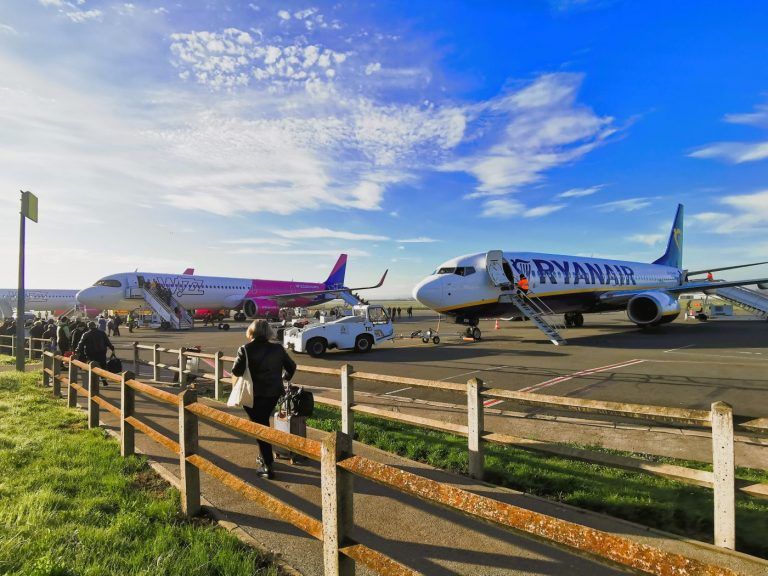
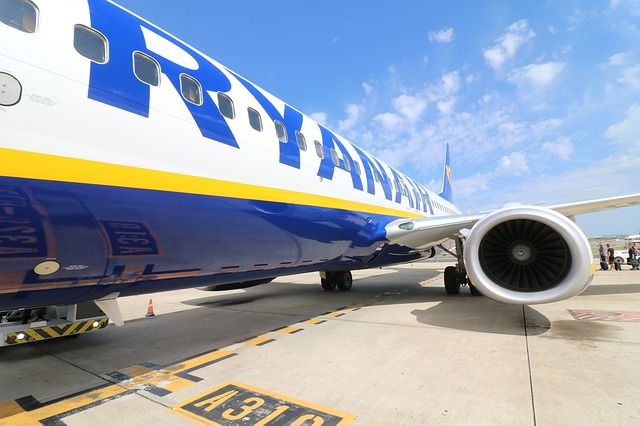
Ryanair has blamed lower fares and higher fuel and pilot costs on a 20% dip in profits for the first quarter of 2018, to €319 million (£285 million).
Despite the drop, in the three months to the end of June, the low-cost carrier said its full-year guidance remains unchanged at between €1.25 billion and €1.35 billion.
Strong traffic growth (up 7%), overcapacity in Europe, and the earlier timing of Easter led to a 4% decline in average fares. Higher fuel and staff costs offset strong ancillary revenue growth in the quarter.
The average fare for the quarter was €38.68, while ancillary revenue rose 25%.
Ryanair said the weaker pricing environment will continue, due to factors including the World Cup, the Northern European heat wave and customer uncertainty about pilot strikes.
Q1 staff costs increased by 34% primarily due to pay increases. EU-261 ‘right-to-care’ costs jumped 40% in Q1 due to over 2,500 ATC flight cancellations in Q1. Punctuality was down, with 75% of flights on time, compared to 89% in the previous year.
In a statement Ryanair said: "Repeated ATC staff shortages (mainly in UK, Germany & Greece) and strikes (France) are causing widespread damage to airline schedules this summer.
"French ATC, the worst offenders, went on strike for nine of the 13 weekends during April, May and June leading to thousands of cancelled flights."
Ryanair has made concessions to its pilots and cabin crew, with new pay deals and the commitment to recognising trade unions. However, Irish-based pilots are due to strike tomorrow, Tuesday July 24, and cabin crew have threatened strikes in Spain, Portugal and Belgium on July 25 and 26.
The airline said: "While we continue to actively engage with pilot and cabin crew unions across Europe, we expect further strikes over the peak summer period as we are not prepared to concede to unreasonable demands that will compromise either our low fares or our highly efficient model."