
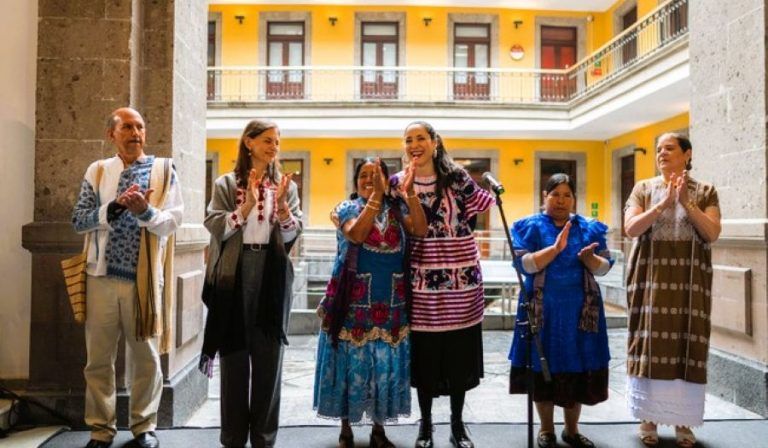
Mexico City has inaugurated a new museum dedicated to the country’s rich Indigenous and Afro-Mexican textile traditions, creating a cultural space that combines history, craftsmanship and contemporary artistic expression.
The Museo de Arte Textil de los Pueblos Indígenas y Afromexicanos (MUT) opened on June 10 to the public. It is located in the historic Casa del Marqués del Apartado, opposite the Templo Mayor archaeological site in downtown Mexico City. The venue occupies a late 18th-century palace where pre-Hispanic remains discovered beneath the building remain visible through an archaeological window.
Mexican Culture Secretary Claudia Curiel de Icaza said at the opening that the museum places living heritage alongside the archaeological treasures of Templo Mayor.
“Our goal was to put living heritage at the center, and there is no better place than this building, with the same importance as the archaeological zone,” she said.
Managed by the National Fund for the Promotion of Handicrafts (Fonart), the $4.6 million project underscores Mexico’s commitment to preserving traditional knowledge and supporting Indigenous and Afro-Mexican communities.
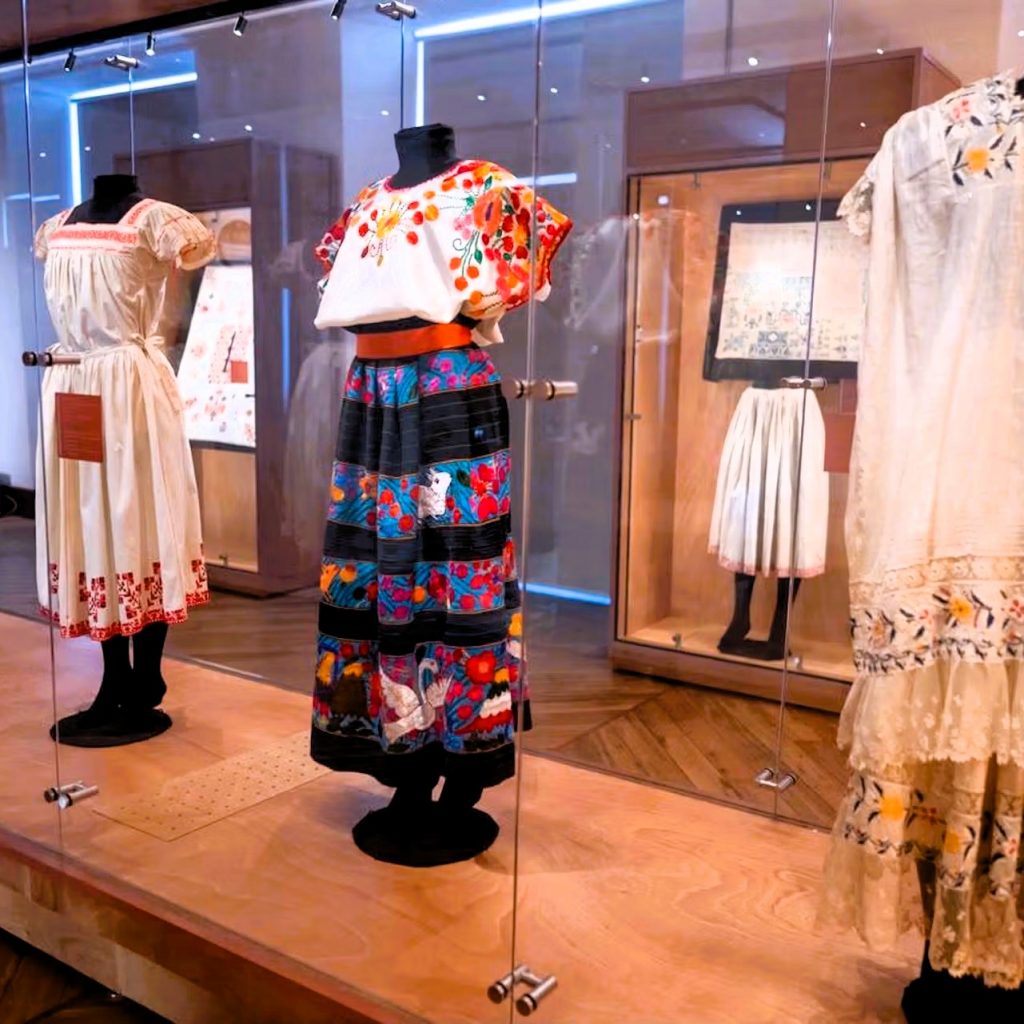
Spread over three levels, the museum houses 16 permanent galleries and one temporary exhibition space displaying 210 pieces. Exhibits highlight weaving techniques passed down through generations, including backstrap and floor looms, embroidery, rebozos and sarapes.
 (Photo: Ministry of Culture-Gerardo Luna)
Curator Alejandro de Ávila described the institution as a “living museum” honoring communities whose artistic contributions have often gone unrecognized despite placing Mexico among the world’s great textile traditions.
The curatorial narrative explores the relationship between textiles, nature, native languages and community knowledge. Visitors can also discover ancient dyeing techniques, fibers such as henequen, and reproductions of historic pieces that revive forgotten methods.
Beyond its exhibition halls, the museum includes educational and community spaces, a children’s area, training facilities and the Taller Original workshop, where artisans and designers collaborate while promoting fair and ethical partnerships.
One gallery addresses cultural appropriation, highlighting traditional Mixe designs from Oaxaca that have been copied by international fashion brands. The initiative seeks to ensure that communities benefit directly from future collaborations.
The museum’s first temporary exhibition features Danish textile artist Trine Ellitsgaard, widow of renowned Oaxacan artist Francisco Toledo.
Open Tuesday through Sunday from 10 a.m. to 6 p.m., the MUT charges MXP95 (USD5.50) admission, while children and artisans receive free entry. Guided school tours, workshops and cultural events are scheduled throughout the year.