Thailand recognizes that safety is an avoidable issue that is tarnishing its tourism image, particularly for the resort city of Pattaya.
The government is intensifying efforts to improve public safety in Chonburi, the province home to Pattaya, as tourism industry players increasingly view security as essential to maintaining visitor confidence and supporting economic growth.
Prime Minister Anutin Charnvirakul has ordered a nationwide crackdown on crime, making Chonburi one of the focal points of the campaign because of its strategic role as one of Thailand’s largest tourism and economic centers.
Speaking during a security policy meeting in the province, Charnvirakul said criminal activity—including organized crime, drug trafficking, cybercrime, online scams and illegal gambling—poses a direct threat to both residents and visitors.
According to reports in the Bangkok Post, the prime minister told provincial authorities that the government would fully support law enforcement officers carrying out their duties without political interference. Charnvirakul stressed that no criminal organization should feel beyond the reach of the law and called for closer cooperation between provincial governors, police commanders, the military and local communities.
The initiative forms part of the government’s 90-day anti-drug campaign but has a much broader objective: reinforcing confidence in destinations that generate billions of dollars in tourism revenue.
For Chonburi, the stakes are particularly high. The province welcomed approximately 25 million visitors in 2025, making it Thailand’s busiest provincial tourism destination outside Bangkok. Around 40% of arrivals were international travelers, while domestic tourism remained the largest segment.
Pattaya alone attracted in 2025 over 18.8 million tourists, down 1.2% over 2024. International tourist arrivals declined 7.64% to 9.95 million.
Among international visitors staying in registered accommodation, India became Pattaya largest source market in 2025. Indian tourist arrivals progressed by almost 11% to 1.81 million, overtaking China, traditionally Pattaya largest inbound market. Chinese travelers reached last year 1.68 million arrivals, a sharp contraction of 35% compared to 2024.
The two other single “million-arrival” markets in 2025 were Russia at 1.34 million, down 7.3% and South Korea at 1.31 million, up by almost 7%. Western Europe generated 1.66 million tourist arrivals with the UK being the largest inbound source with 0.51 million arrivals. This numbers however highlight Pattaya’s strong dependence on Asian travelers even as the market diversifies.
Industry calls for stronger regulation
The government’s tougher security stance comes as tourism operators themselves are demanding more decisive enforcement, reports the Bangkok Post.
During a recent meeting with Tourism and Sports Minister Surasak Phancharoenworakul, the Association of the Chonburi Tourism Federation outlined a series of structural problems that it believes are damaging the destination’s competitiveness.
According to the federation, more than 70% of accommodation providers in Chonburi province operate without hotel licenses, creating unfair competition for compliant businesses and raising concerns over safety standards.
Industry leaders argue that outdated regulations make obtaining licenses difficult, encouraging operators to remain outside the legal framework. They are urging the Interior Ministry to simplify licensing procedures while simultaneously increasing enforcement against illegal operators.
The association also highlighted the rapid growth of unlicensed tour companies, many allegedly operating through foreign nominee structures, offering unauthorized transport and sightseeing services at prices legitimate businesses struggle to match.
Tourism executives say stronger cooperation between tourism inspectors and the Tourist Police is needed to improve on-the-ground enforcement.
Nightlife under scrutiny
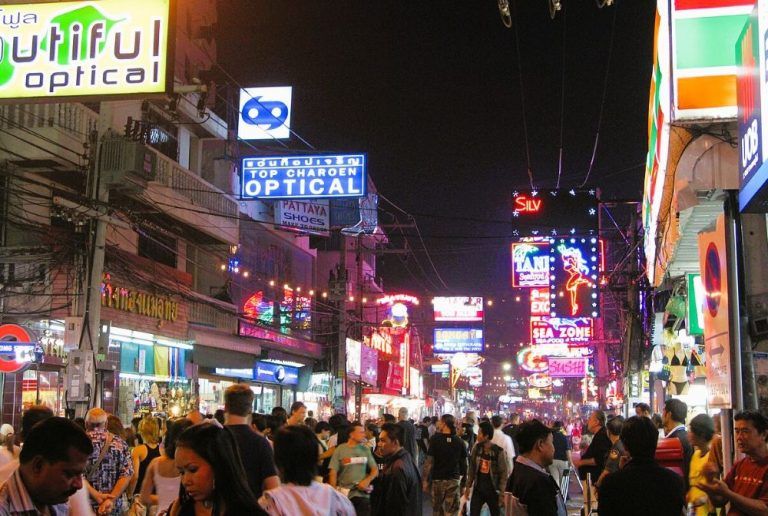
A particular concern regarding safety targets nightlife venues and activities. The recent fatal fire at an unlicensed entertainment venue in Bangkok has renewed attention on nightlife regulation across Thailand. In Pattaya, operators say many bars and entertainment venues now operate outside the city’s designated entertainment zones, creating friction with local communities while exposing weaknesses in licensing enforcement.
Industry representatives argue that authorities should either strictly enforce existing zoning regulations or modernize them to reflect today’s tourism landscape rather than allowing inconsistent enforcement that can foster corruption and undermine visitor confidence.
Safety, the new luxury for healing Thailand tourism
Tourism leaders also called for improvements that directly affect the visitor experience, including faster immigration processing at airports and additional international flights to U-Tapao Airport to relieve pressure on Bangkok’s Suvarnabhumi Airport.
Their message is clear: improving safety requires more than police operations. It also depends on better regulation, modern infrastructure and consistent enforcement that creates a level playing field for legitimate tourism businesses.
For Thailand, where tourism remains a pillar of the national economy, Chonburi represents an important test case. The province combines mass tourism, nightlife, beaches and industrial development, making it particularly vulnerable to organized crime and illegal business practices.
The government’s latest crackdown signals recognition that destination security has become an increasingly important factor in travelers’ destination choices. Beside the Tourism Authority of Thailand message “ Healing is the new luxury”, safety is also Thailand new luxury to provide to travelers to the Kingdom…