Back in early January, at the height of tensions between Cambodia and Thailand along their shared border, media outlets in both countries reported arbitrary decisions affecting travel for Cambodian and Thai citizens. Rumors? Propaganda?
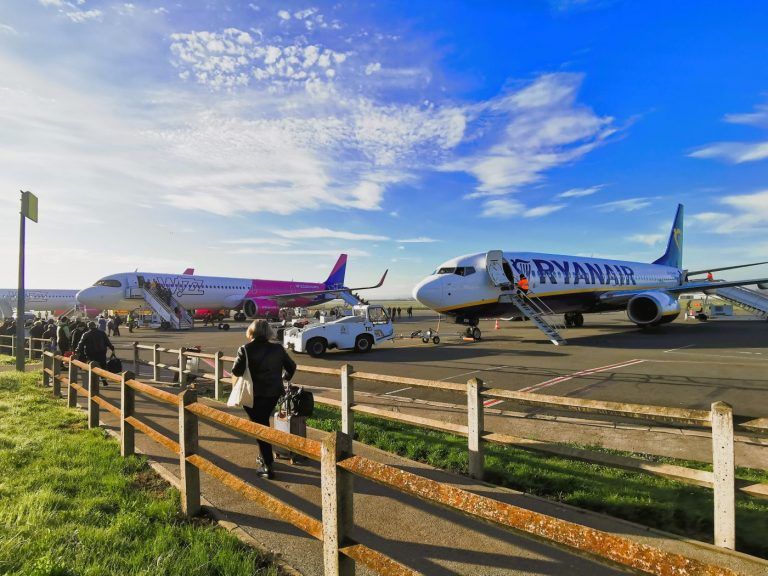
Although Thai authorities have indefinitely closed land border crossings, flights between the two countries have continued uninterrupted, carrying passengers every day.
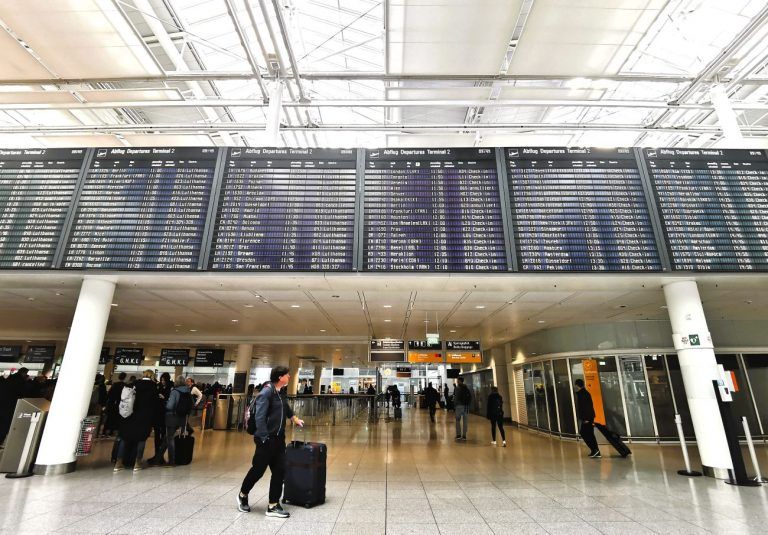
That remains the case today. Bangkok is connected to Phnom Penh with up to nine daily flights, while as many as five flights a day operate between the Thai capital and Siem Reap. Even as the Royal Thai Army bombed areas inside Cambodia last December, air services never ceased.
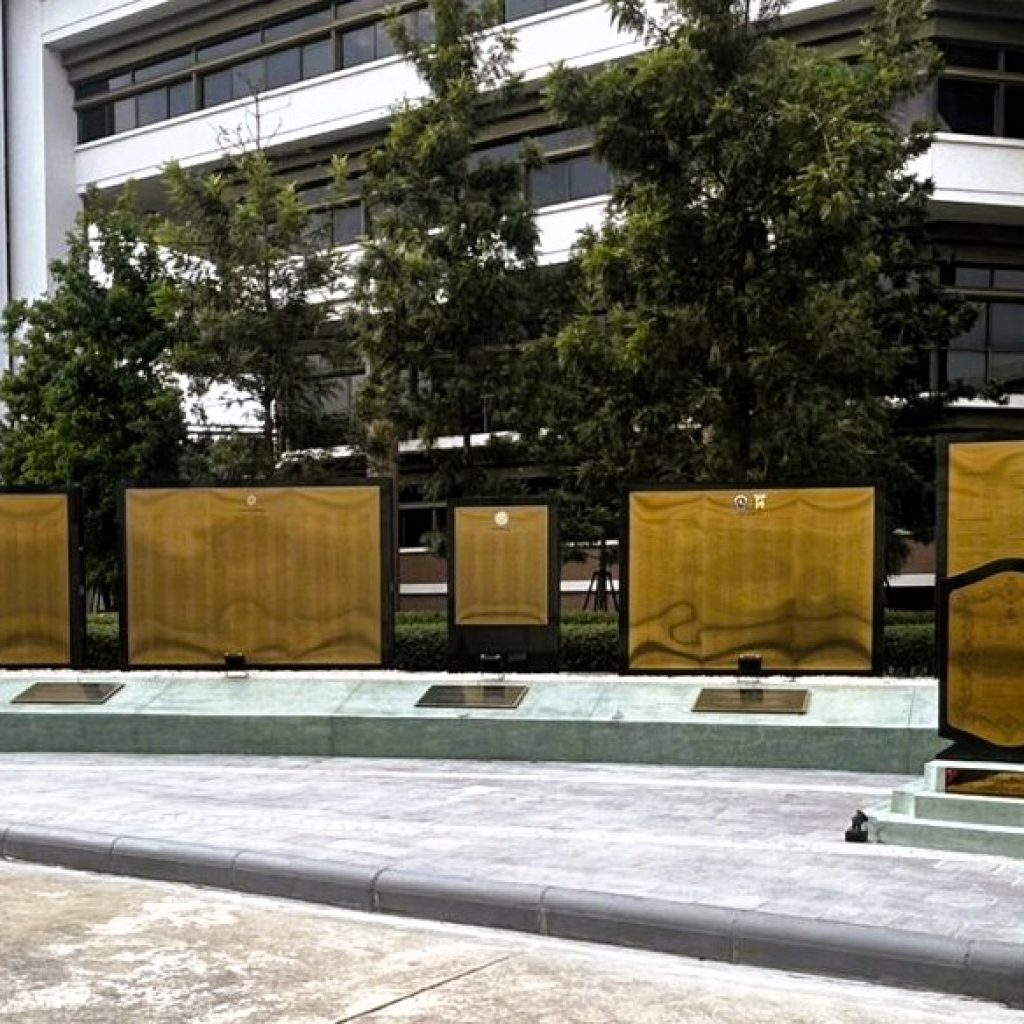
The memorial to Thai soldiers killed during the war with Cambodia at Bangkok Royal Thai Army headquarters (Photo: https://www.khaosodenglish.com/wp-content/uploads/2026/01/S__38240503_0-1068×601.jpg)
Foreign travelers have largely remained unaffected by the recurring tensions that continue to strain diplomatic, economic and political relations between Cambodia and Thailand. Officially, there are no restrictions preventing citizens of either country from visiting one another, although both governments have advised against non-essential travel. But is it really only a recommendation?
Last December, Cambodian authorities effectively barred their citizens from traveling to Thailand except in emergency situations or for dual nationals, such as Khmer citizens holding French or U.S. passports.
Cambodian media at the same time reported that Thai immigration authorities denied entry to numerous Cambodian travelers without any clear explanation other than their nationality.
Some websites -including the French embassy in Cambodia– even advised foreign travelers heading to Cambodia to avoid a transfer in Bangkok for safety reasons. The assessment was immediately rejected by Thailand who assured to treat passengers according to international air transport rules.
Everything normal… only in words
Meanwhile, a review of the Thai Embassy website in Cambodia shows no mention of any restrictions on Cambodian citizens. According to the Thai Embassy, Khmer citizens continue to benefit from visa-free entry for up to 30 days (to be soon back to 14 days). However, travelers are required to show proof of at least US$400 in funds, a return ticket and confirmed accommodation.
Yet, without officially saying so, both governments have severely curtailed relations -almost towards “ground zero”.
In Cambodia, the boycott of Thai products has become almost total. Shops display stickers supporting the campaign, while Khmer websites list Thai-owned companies and products that consumers are encouraged to avoid. The boycott -conducted by private citizens- affects everything; from Anantara Hotels to convenience chains such as Big C Mini and 7-Eleven, as well as Thai cosmetics. Cambodia-Thailand bilateral trade dropped sharply to US$1.1 billion in the first five months of 2026, a 38.7% decline from the same period in 2025.
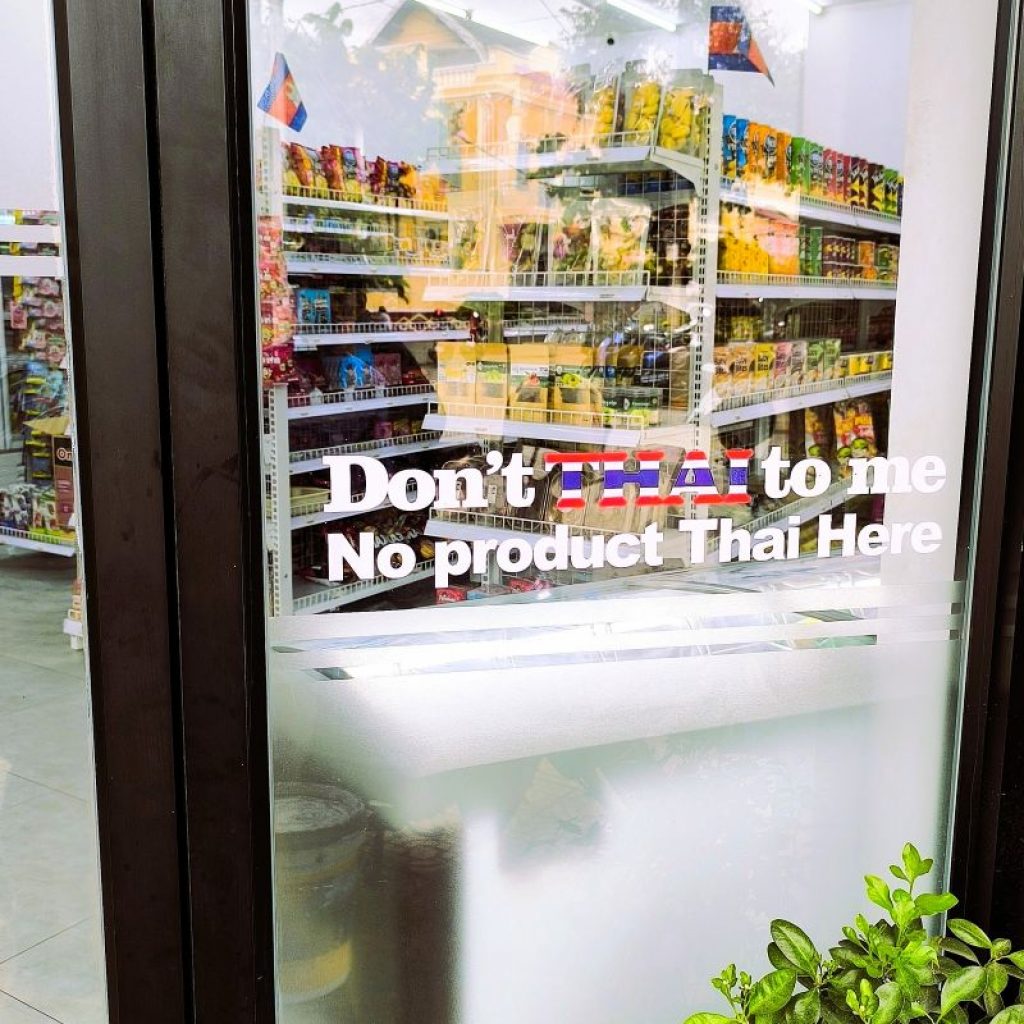
A shop in Battambang, Cambodia, displays a Thai products’ boycott sign
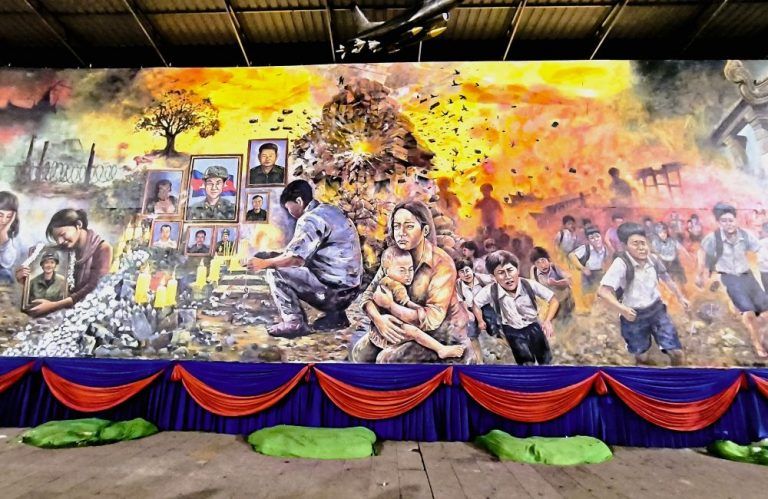
Thai movies, music and videos have also been banned. More recently, large murals -drawn in a very communist style- have appeared in Phnom Penh and Siem Reap depicting Cambodians’ suffering, although without explicitly identifying Thailand through its national symbols.
In Thailand, immigration authorities indeed multiply denying entry to most Cambodian citizens. The measures appear to go beyond that, with some Indian and Chinese business travelers based in Cambodia reporting to have faced entry rejection. Such actions are often justified on security grounds.
Yet, when ordinary Cambodian travelers carrying all the necessary documents are turned away solely because of their nationality, questions inevitably arise over the meaning of “national security.”
For Thai immigration authorities, to be Cambodian is increasingly suspicious if not criminal. Tourism, traditionally regarded as a bridge between cultures and a means of fostering understanding, is transformed into a perceived threat rather than a tool for rebuilding trust.
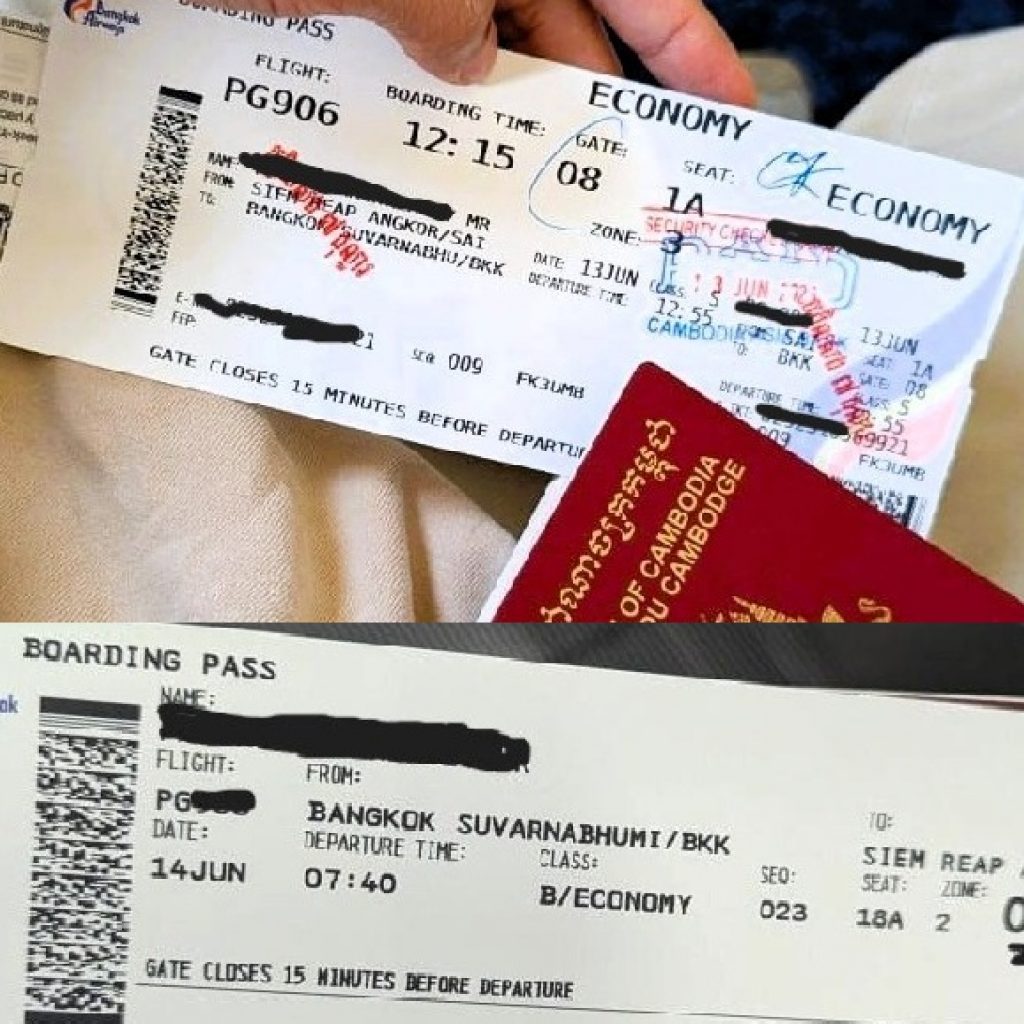
A Cambodian passenger shows its inbound ticket and its returned ticket after being denied entry into Thailand.
These developments on both sides of the border can only deepen resentment than helping overcome the current mistrust between the two countries. From January to May, total arrivals from Cambodia to Thailand reached 20,100 down 89.8% compared to 2025. Total Thai visitor arrivals to Cambodia during the first quarter 2026 reached 25,867 down 94.8% compared to the same period of 2025. Tourism, one of Southeast Asia’s most effective forms of soft power, risks becoming a ticking time bomb.
The situation also raises questions about the role of ASEAN in promoting closer ties among the peoples of the region. The timing is particularly striking as the Mekong Tourism Forum opens in Yangon, Myanmar on June 16, bringing together the six countries of the Greater Mekong region — including Cambodia and Thailand — under the banner of cooperation and shared prosperity.
Against this backdrop, the contrast between the forum’s aspirations and the realities on the ground could hardly be more stark… and saddening.