Europe’s airports and airlines have issued an open letter to European Commission President Ursula von der Leyen, warning that the rollout of the European Union’s new Entry/Exit System (EES) is causing major operational disruption and threatening the smooth functioning of summer air travel.
While the aviation sector continues to support the objectives of the biometric border control system, industry leaders say its implementation is creating severe bottlenecks at external Schengen borders, resulting in excessive waiting times, flight disruptions and growing pressure on airports, airlines and border authorities.
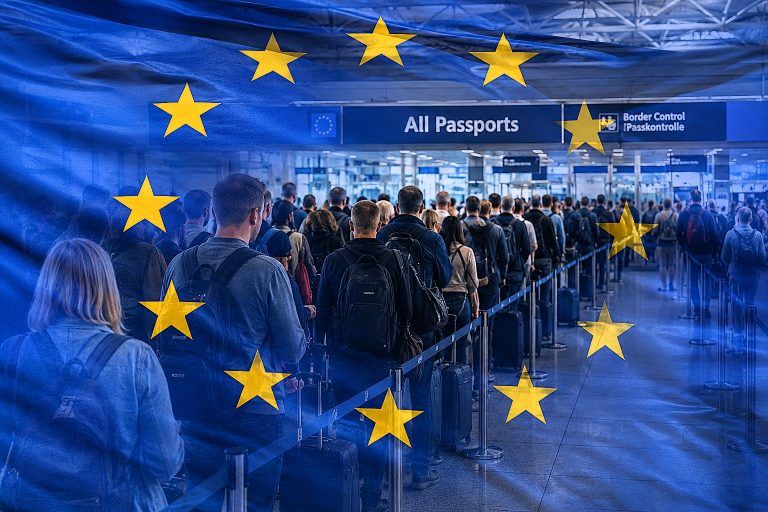
According to the letter, passengers are already experiencing waits of up to five hours at border control since the full implementation of the EES in April.
The delays are affecting millions of travelers, including families, elderly passengers and those with reduced mobility, while airlines are reporting missed connections, delayed departures and mounting operational challenges for frontline staff.
The industry argues that these problems persist despite Member States making use of temporary measures allowing border authorities to postpone biometric data collection until early September. Although intended to ease the transition, the flexibility has failed to eliminate long queues or prevent operational disruption.
With July and August expected to bring around 40 million more passengers through European airports than the previous two months, aviation organizations warn that the situation is likely to deteriorate rapidly unless additional action is taken.
The concerns extend beyond Europe’s largest hubs. Airports serving popular leisure destinations are also struggling to process arriving passengers efficiently, with travelers reportedly queuing outside terminal buildings while airlines face departures with passengers still waiting at immigration checkpoints.
Border issues to affect Europe’s image as a destination
Industry leaders also caution that prolonged border delays could damage Europe’s reputation as an attractive travel destination. They argue that reports of lengthy immigration queues are already discouraging some international visitors, potentially affecting tourism, air connectivity and the wider European economy.
The letter also challenges recent comments from the European Commission suggesting that long waiting times are primarily the result of airline scheduling and concentrated flight arrivals. Aviation stakeholders reject that explanation, noting that airline schedules are planned well in advance and that passenger demand patterns have long been predictable. They argue the EES rollout should have been designed to accommodate known traffic peaks rather than disrupt airport operations.
The sector is calling on the Commission to immediately grant Member States greater operational flexibility, allowing temporary suspension of EES procedures whenever passenger volumes exceed border processing capacity during the peak summer period.
Looking beyond this summer, the industry also wants a permanent mechanism allowing border authorities to suspend biometric processing under clearly defined exceptional circumstances.
Airports and airlines stress that these measures would not weaken border security. Instead, they propose temporarily reverting to existing Schengen border checks, including passport stamping, whenever operational pressures become excessive.
The organizations reaffirm their support for the long-term goals of the Entry/Exit System but insist that stronger operational flexibility is essential until staffing levels improve, technical systems become fully reliable, self-service kiosks and automated border gates are widely deployed, and the planned pre-registration app is fully operational across all Member States.