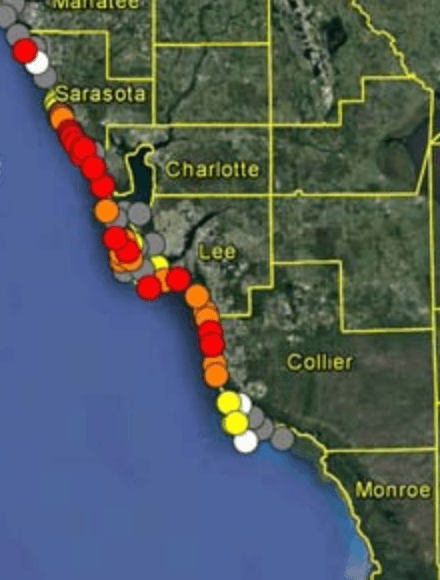
Vacationers in Florida are being warned to take care as the worst outbreak of red tide in over a decade is devastating beaches in the southwest of the state.
Officials fear the toxic algae bloom, which is affecting at least 120 miles of beaches on the Gulf of Mexico, could last until 2019.
It has already killed thousands of fish, hundreds of sea turtles, and pelicans and manatees.
It poses health risks to beachgoers, particularly those with severe or chronic respiratory conditions, such as emphysema or asthma.
The algae can cause rashes and eye irritation, nausea, vomiting and allergy-like symptoms in humans, while drinking water with the toxins can cause long-term liver disease.
At least 15 people have sought medical treatment due to the toxic algae.
Last month, Governor Rick Scott declared a state of emergency for seven counties after the algae blooms tainted the water in the wake of discharges from Lake Okeechobee.
This gave state environmental and tourism agencies more resources to respond to problems caused by the algae.
The red tide, which usually goes away in the spring, has persisted for nine months.
According to US reports, the worst bloom in 2006 lasted 17 months.