Welcoming more than 16 million visitors annually, Singapore’s Sentosa Island is preparing for its most ambitious makeover since opening as a leisure destination more than 50 years ago.
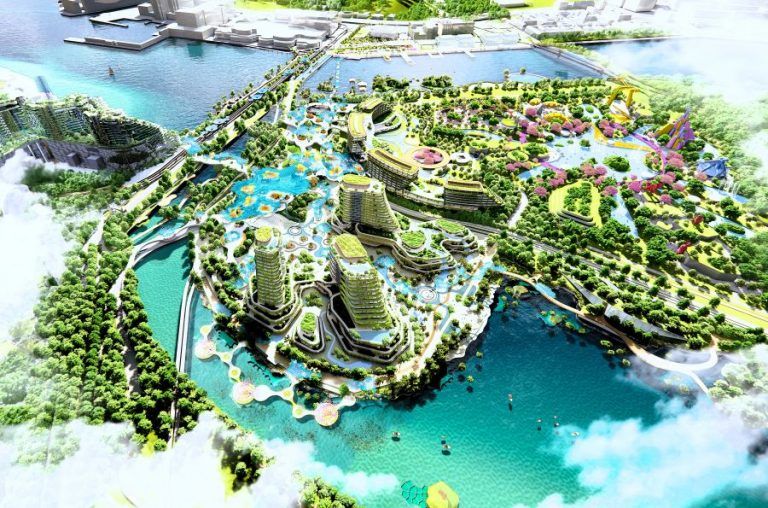
Under the newly unveiled Greater Sentosa Master Plan (GSMP), the island will expand to include neighboring Brani Island, creating a larger tourism and lifestyle destination designed to attract twice as many visitors over the coming decades.
The long-term blueprint was unveiled last week by the Sentosa Development Corporation (SDC) and lays out a vision that combines new attractions, hotels, iconic landmarks, enhanced beaches and nature conservation. Development will roll out progressively from the early 2030s, allowing the destination to evolve alongside changing visitor expectations.
Merging two islands while boosting Singapore coastline resilience
Minister-in-charge of Trade Relations Grace Fu said the masterplan is part of Singapore’s push to boost its appeal as a tourism destination with new experiences.
“We are reimagining what Sentosa can become for decades ahead,” she declared. The redevelopment will go with long-term coastal protection efforts as rising sea levels pose an existential threat to the low-lying island nation, with site-specific studies already underway for Sentosa’s 16 km coastline.
Fu added resilience measures will be integrated into all future Sentosa developments, making sustainability a core pillar of the island’s expansion.
Throughout the project, SDC pointed that sustainability will indeed remain central to every phase of development. Future projects will prioritize climate resilience, biodiversity, ecological connectivity and thermal comfort while integrating more green infrastructure into visitor experiences.
Brani Island, covering around 120 hectares, will become part of Greater Sentosa, opening up significant new space for tourism development while preserving the area’s natural character. Officials say the expansion will reinforce Sentosa’s role as Singapore’s premier island playground while strengthening its identity as a sanctuary within the city.
“The GSMP is the greatest transformation in our history. We will stay true to the soul and identity of this island, while shaping the next generation of world-class experiences,” said SDC CEO Thien Kwee Eng.
Brani West, center of Sentosa redevelopment
Among the headline projects is Brani West, expected to become one of the largest attraction development zones in the master plan. Discussions are already underway with potential partners to deliver next-generation entertainment concepts aimed at both local residents and international visitors.
Several new landmarks are also planned across Sentosa.
The Imbiah Canopy will become a new hilltop destination featuring attractions, restaurants, retail outlets and event spaces overlooking the island. Visitors will also be able to access an elevated treetop skywalk linking Mount Imbiah with Siloso Beach.
Nearby, the Imbiah Lookout Walk will provide a sheltered forest canopy walkway connecting Sentosa Sensoryscape with the island’s expanding network of nature trails.
On the waterfront, a new lifestyle hub called Sensorium is envisioned as a flagship destination combining indoor attractions, green public spaces and a flexible venue for festivals and events.
The transformation extends to Sentosa’s three beaches—Siloso, Palawan and Tanjong—which will all undergo extensive redevelopment. Plans include upgraded leisure facilities, new beach clubs, additional waterfront attractions and a floating boardwalk linking offshore islets along the island’s three-kilometer coastline.
The master plan builds on recent projects such as Sensoryscape, which combines gardens, digital installations, shaded walkways and biodiversity initiatives into a green corridor linking Resorts World Sentosa with the island’s beaches.
Visitors could eventually explore a unique islet-hopping experience, allowing them to move between small islands while discovering Sentosa’s marine environment. New dining concepts taking advantage of sunrise and sunset views are also under consideration, alongside elevated treetop restaurants.
New transportation hub for Singapore
Transport improvements form another major pillar of the master plan.
A new Island Heart Transport Hub will become the main gateway into Greater Sentosa, linking Sentosa and Brani while serving as a central arrival point for visitors.
The existing Sentosa Express monorail will eventually be replaced by a higher-capacity People Mover System, improving connectivity across the enlarged destination. Additional transport options under study include expanded water taxi services and enhanced waterfront connections, complementing the existing Singapore Cable Car.
If the vision becomes reality, Sentosa will not simply become bigger—it aims to redefine itself as one of Asia’s most innovative integrated leisure destinations, balancing tourism growth with nature, wellness and sustainability.