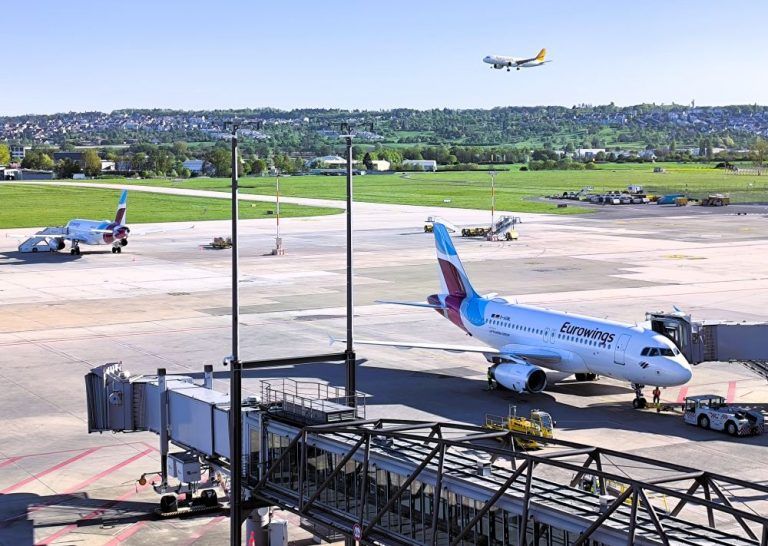
Germany’s air travel recovery has fallen further behind the rest of Europe than at any point since the pandemic, according to a new report -kept unpublished- from the German Aviation Association (BDF). The BDF represents the four main German air carriers: Lufthansa, Eurowings, Condor and TUIFly.
The unpublished study, first reported by the regional newspaper Neue Osnabrücker Zeitung, found airline seat capacity to and from Germany reached just 87% of 2019 levels during the first half of 2026.
Across the rest of Europe, average seat capacity recovered to 113% of pre-pandemic levels over the same period, leaving Germany trailing by 26 percentage points. In the first half of 2023, the gap stood at 18 percentage points.
Several European markets have significantly outperformed Germany. Poland has reached 146% of its pre-pandemic seat capacity, followed by Greece at 143% and Portugal at 125%.
Germany is now among the weakest-performing aviation markets in Europe, alongside Finland, which has recovered to 86% of 2019 capacity, and Sweden at 77%.
The BDF remains pessimistic for the near future, saying that there is little sign of an improvement.
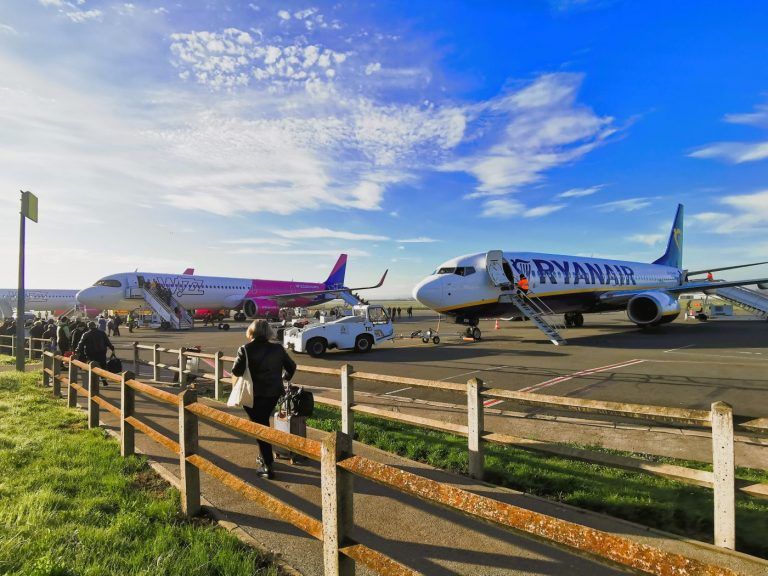
Earlier this year, low-cost giant Ryanair announced it will close its operating base at Berlin Brandenburg Airport (BER) in October 2026. The airline will continue serving Berlin, but only as a destination within its network rather than as a base for aircraft and crews.
According to the association, Germany’s aviation stagnation resulted in an inflation-adjusted economic loss of around €40 billion between 2023 and 2025.
The estimated loss reflects reduced business for airport suppliers such as catering companies and fuel providers, as well as lower spending by tourists and business travelers at hotels, restaurants, and retailers.
Industry warns soaring costs are holding back aviation growth
The report has prompted renewed calls for government action. Germany’s Federal Government Coordinator for Maritime Economy and Tourism, Christoph Ploß, said the figures underline the need to restore air connectivity.
“The numbers show that we must work across party lines to increase the number of flights to and from Germany,” Ploß told the Neue Osnabrücker Zeitung.
He blamed Germany’s comparatively high aviation operating costs for weakening the country’s competitiveness.
While the federal government reduced the country’s aviation tax on July 1, Ploß said further measures are needed to lower airport charges as well as infrastructure and security costs.
Without additional reforms, he warned, more airlines could shift aircraft away from Germany, reducing connectivity and pushing up airfares.
He added that higher ticket prices would make both leisure and business travel increasingly expensive, risking affordable vacations for German travelers.