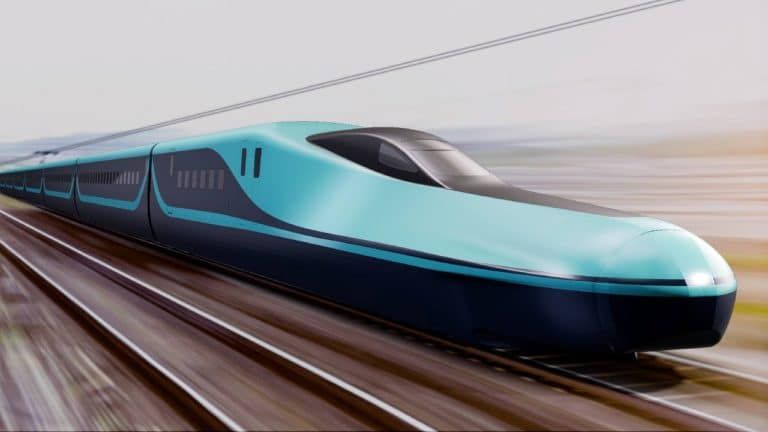
Japan will provide two of its iconic Shinkansen trains to India as part of the country’s first high-speed rail project. East Japan Railway Company (JR East) will deliver one E5 and one E3 series train to India free of charge in early 2026. Both train sets will serve as inspection vehicles to monitor and collect data along the upcoming Mumbai–Ahmedabad High-Speed Rail corridor.
The trains, fitted with specialized sensors and testing equipment, will study how Japan’s bullet train technology performs under India’s challenging conditions, including high heat, dust, and varying terrain.
The data collected will play a key role in adapting the design of Japan’s next-generation E10 series Shinkansen. The newest series is slated to serve as the backbone of India’s high-speed passenger service from 2030.
Semi-high speed trains until the delivery of new Shinkansen E10
Stretching roughly 500 kilometers (310 miles) between Mumbai and Ahmedabad, the future line represents India’s first true high-speed railway. The project benefits of Japanese engineering expertise. But also of Tokyo’s financing. About 80% of the project’s cost, estimated at around $11.5 billion, comes from low-interest loans from Japan.
The project, overseen by India’s National High Speed Rail Corporation Limited (NHSRCL), is expected to open in phases. The first operational section should debut in August 2027.
This initial phase, running between Surat and Bilimora in Gujarat, will serve as a pilot stretch for India’s bullet train operations. Originally, India planned to use the E5 series trains for commercial service from Day 1. However, mounting costs and repeated delivery delays led Indian officials to explore using domestically produced, semi–high-speed trains instead. Vande Bharat trains will run at a speed of up to 250 km/h. By comparison, the Shinkansen E10’s operating speed is 320 km/h.
Once receiving E10, India will have the most advanced generation of Shinkansen technology. It will feature improved safety systems, upgraded braking and vibration control, and passenger comforts tailored to long-distance travel.
When fully operational, the Mumbai–Ahmedabad corridor will cut travel time between the two major cities from over six hours to just over two.
Japan looks at exporting more Shinkansen technology
Japan’s decision to provide the E5 and E3 trains underscores Tokyo’s commitment to ensuring its flagship rail technology remains central to India’s emerging bullet train network.
It will also show as a prestigious export object for other high-speed rail projects in Asia-Pacific. While Japan lost the bid to build Indonesia’s first high speed rail from Jakarta to Bandung to the profit of China, the East Japan Railway Company (JR East) pins its hopes for the future high speed rail network in Australia.