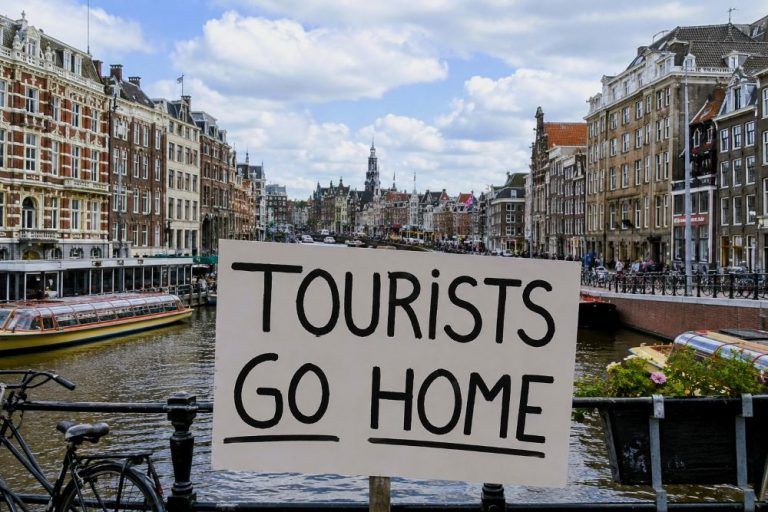
Amsterdam is preparing to introduce new tourism measures over the existing ones, which will make the city one of the toughest in Europe in managing tourism while showing a growing hostility towards travelers. Among others is a gradual increase in its tourist tax to 20% by the end of the decade, as city leaders seek to curb overtourism and improve the quality of life for residents.
The Dutch capital already charges one of the highest visitor taxes in Europe. Overnight visitors currently pay a tourist tax equivalent to 12% of their accommodation cost, while day visitors arriving by cruise ship pay a separate fee fixed at €15 per day.
Under proposals unveiled by Amsterdam‘s new coalition government, the overnight tourist tax would rise to 16% next year before increasing by one percentage point annually until it reaches 20% in 2030.
City officials say the higher levy is designed to ensure visitors contribute more fairly to the costs associated with maintaining one of Europe’s most visited destinations.
Amsterdam welcomed last year 9.5 millions guests, up 2% over 2024. It makes tourism one of the city’s most important economic sectors. However, local authorities say the growing number of visitors has also placed mounting pressure on public spaces, municipal services, neighborhoods, and infrastructure.
According to the coalition agreement, tourism remains vital to the city’s economy, but the associated costs of managing large visitor numbers have become increasingly significant.
Revenue generated from the higher tourist tax would be invested in keeping Amsterdam cleaner, safer, and more attractive for both residents and visitors, is the official explanation provided by the new coalition. Funding would also support the maintenance of public spaces, improved enforcement, and projects aimed at enhancing the city’s overall living environment.
To have or not to have tourists?
The proposed tax increase forms part of a much broader tourism management strategy designed to create what city leaders describe as a more balanced visitor economy.
Among the additional measures under consideration is the closure of Amsterdam’s cruise terminal, effectively ending sea cruise arrivals directly into the city center. Officials say discussions with the Dutch national government and regional authorities will determine alternative solutions for cruise traffic.
The coalition also plans to continue efforts to reshape the historic city center by purchasing buildings and acquiring businesses where necessary. The objective is to diversify the area’s character, reduce overcrowding, and create a more sustainable balance between tourism, commerce, and residential life.
Another proposal would see increases to Amsterdam’s entertainment levy, which currently applies to activities such as canal boat tours, canoe rentals, and other recreational services operating on the city’s famous waterways.
The city is also pressing ahead with plans to develop a new Erotic Centre in the Zuid district. The purpose is to provide a safer working environment for sex workers while reducing organized crime and easing visitor pressure on the city’s historic Red Light District.
Officials say the new facility will focus on smaller-scale operations outside the city center, helping spread visitor activity across different neighborhoods rather than concentrating it in already crowded areas.
Amsterdam has spent several years introducing measures aimed at limiting the impacts of mass tourism. Previous initiatives have included restrictions on new hotel developments, tighter regulations on short-term rentals, campaigns discouraging nuisance tourism, and efforts to reduce party tourism. The latest proposals would reinforce Amsterdam’s position as one of Europe’s most proactive destinations in managing overtourism. But also conveying the underlying message to visitors: “We do not want you anymore”.