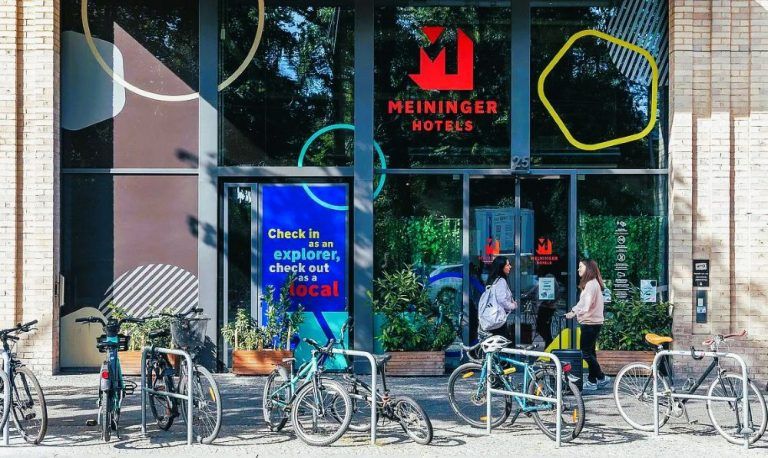
Meininger Hotels is accelerating its European expansion after posting annual revenue of more than €200 million (about US$235 million) and outlining plans to increase its portfolio from 37 to 50 hotels by the end of the decade.
The hybrid hotel group, which combines hotel amenities with the social atmosphere of a hostel, reported another strong financial year despite a softer events calendar and ongoing economic pressures across Europe.
The company recorded approximately 4.6 million overnight stays during its fiscal year, up nearly 2% year over year, while average occupancy remained just below 80%.
CEO Ajit Menon said the results demonstrate the resilience of the company’s business model.
“We delivered solid year-over-year growth in both revenue and profit despite higher living costs and fewer major events. Our performance reflects the strength of our hybrid concept and the commitment of our teams,” he said.
Group travel continues to be a major contributor to growth, accounting for between 20% and 25% of total revenue. That segment expanded by 10% over the past year, with similar growth forecast for fiscal 2027.
Expansion pipeline and digital investments drive next phase
Meininger currently operates 37 hotels offering around 6,000 rooms and more than 21,000 beds in 27 European cities.
A new Barcelona property opened in June, while additional hotels are planned for Edinburgh and Tel Aviv, followed by Strasbourg in 2027 and Madrid, Dublin, and Porto in 2028.
The long-term goal is to reach 50 hotels by 2030, with much of the future growth focused on Southern and Eastern Europe.
The company expects demand to strengthen during fiscal 2027 as Europe hosts more international trade shows, sporting events and major concert tours. Overnight stays are projected to reach approximately 5 million.
Alongside geographic expansion, Meininger is investing heavily in digital technology designed to improve the guest experience and streamline operations. Its AI-powered website chatbot, MILA, is now handling a large share of routine customer inquiries, while online check-in continues to reduce wait times at reception.
The hotel group is also introducing a new cloud-based HR platform to standardize employee management across the business. The second phase of the rollout will be completed this year.
Another major initiative is the deployment of Mobile Key, allowing guests to unlock rooms with their smartphones. The technology is scheduled to be available across the entire portfolio by the end of fiscal 2028.
The company is also upgrading payment systems, business travel booking tools, and self-service features for group customers.
Investment is also flowing into existing hotels. Renovation projects have recently been completed in Frankfurt, Salzburg, Amsterdam and Copenhagen, while Berlin Mitte Humboldthaus underwent an extensive redesign that included upgraded guest rooms, a modernized lobby and a new bar.
Additional refurbishments are planned in Munich, Vienna, Marseille and Paris during 2027.
The company is also expanding its ESG initiatives through greenhouse gas monitoring, employee sustainability training and climate risk assessments for selected hotels as it works to reduce emissions and strengthen long-term resilience.