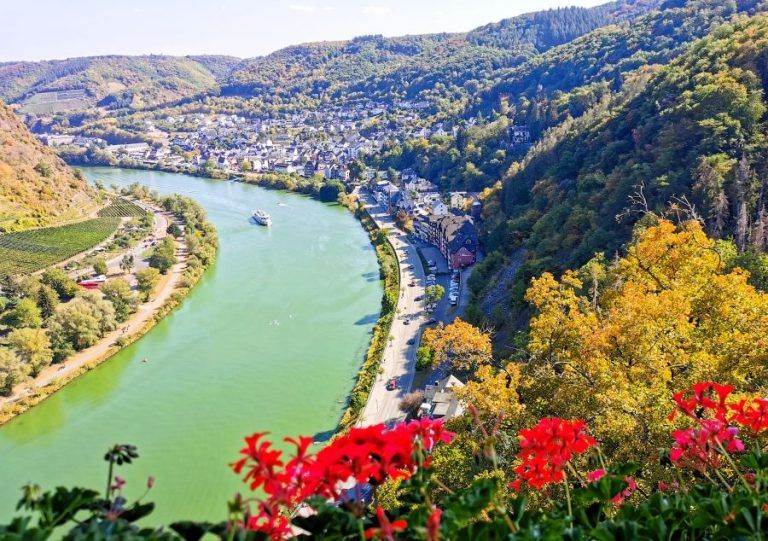
Europe’s booming river cruise industry is facing one of its toughest summers in years as an unprecedented heatwave and prolonged drought leave key waterways at critically low levels, forcing cruise lines to alter itineraries, bus passengers between ports and, in some cases, rescue stranded vessels.
The Rhine and Danube, Europe’s two most important river cruise corridors, have both been hit by exceptionally low water levels following weeks of record-breaking temperatures across much of the continent. The disruption comes during the peak summer travel season, when hundreds of river cruise departures operate each week.
Europe now has more than 380 river cruise vessels in service, with around 60 additional ships on order. According to industry estimates, European river cruising welcomed approximately 1.5 million passengers in 2024, while the Cruise Lines International Association (CLIA) estimates the sector has grown by 10% to 15% annually over the past decade.
Incidents multiply this year
Climate change in Europe highlights a growing challenge for an industry that has enjoyed rapid expansion over the past decade but remains increasingly vulnerable to climate-related disruptions.
One of the most visible incidents occurred on Germany’s Rhine River near Bonn on July 16, where a river cruise ship ran aground on a sandbar after water levels dropped sharply. The vessel remained stranded for several hours before being pulled free by a freighter and escorted into deeper water.
Further east, cruise operations on the Danube have also been heavily affected. Near Budapest, several cruise ships were unable to continue their journeys as water levels approached historic lows. Hungary’s water authorities said river levels had fallen to just a few cm above the record lows recorded in 2018, leaving some sections difficult or impossible to navigate.
The disruption has been particularly severe on the popular Budapest-Vienna stretch, one of Europe’s busiest river cruise itineraries. Many passengers have been transferred by coach while cruise companies reposition vessels to continue their voyages from navigable sections of the river.
According to Reuters, one Hungarian river cruise operator has reported an 18% decline in July bookings as concerns over disrupted itineraries spread.
The problems extend well beyond tourism. Freight has also been affected as the Rhine serves as one of Europe’s busiest commercial shipping routes, linking major industrial regions from Switzerland through Germany and into the Netherlands.
The latter has now officially declared a national water shortage, raising its drought response to Level 2 for only the third time in recent decades. Dutch authorities warn that reduced river inflows from the Rhine and Meuse, combined with minimal rainfall and soaring temperatures, are placing increasing pressure on water resources. Experts observe that the current conditions are arriving unusually early in the season.
The Danube has also experienced significant disruption further downstream. In Romania, authorities reported the river had fallen to its lowest level in three decades, affecting cargo shipping and limiting irrigation in agricultural regions.
A need to adapt river cruises to climate change
For Europe’s river cruise operators, adapting to low water has become an increasingly familiar exercise.
Cruise companies have developed contingency plans following similar disruptions in recent years, particularly during the droughts of 2018 and 2022. Depending on river conditions, operators may swap ships, relocate embarkation points, substitute coach transfers for sailing segments or arrange hotel stays where navigation becomes impossible.
Avalon Waterways recently shifted embarkation for some cruises from Nuremberg to Passau due to low water on parts of the Danube. AmaWaterways has transferred passengers from its flagship AmaMagna, placing guests in hotels before continuing their journeys by coach where necessary.
The company says it continuously monitors river conditions and has contingency plans that include alternate docking locations, modified excursions and ship swaps to minimize disruption.
Despite the operational challenges, demand for river cruising remains robust.
Major operators continue investing heavily in new capacity. Viking plans to expand its river fleet to 114 vessels by 2028, while AmaWaterways is adding 15 new European river ships in the coming years. Celebrity Cruises is also entering the European river cruise market, with five purpose-built vessels on order.
Yet climate scientists warn that the industry’s biggest challenge may lie ahead.
Repeated summers of extreme heat, prolonged drought and falling river levels are increasingly being viewed not as isolated events but as part of a longer-term trend across Europe’s waterways. Over the longer term, however, Europe’s river cruise sector may need to rethink vessel design, itineraries and seasonal operations.