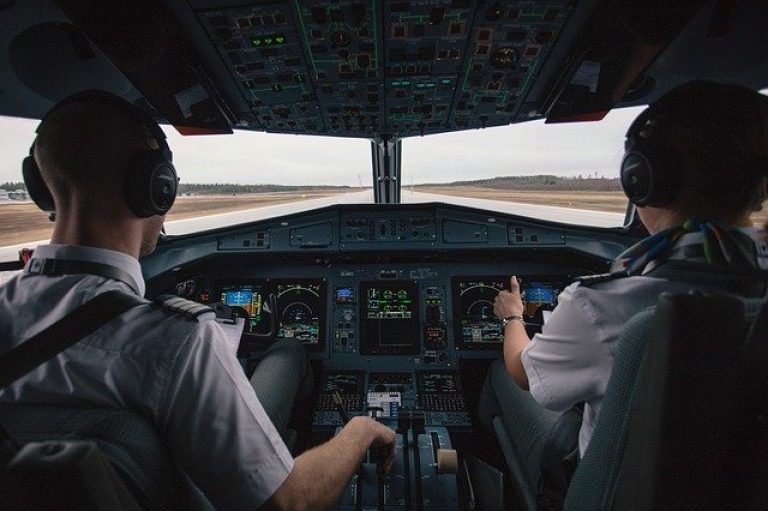
The call for single pilot operated commercial flights is gaining steam.
Having just one pilot in the cockpit is an obvious plus for cost-conscious airlines, despite the safety fears.
More than 40 countries have petitioned the International Civil Aviation Organisation (ICAO) to set aviation standards to allow single-pilot flights.
These include Germany, the UK and New Zealand.
The European Union Aviation Safety Agency (EASA) has been collaborating with planemakers to work out how solo pilots could operate flights safely.
EASA says services could begin by 2027.
However, it is not well supported by pilots or the public.
“The people going down this route are not the people who fly jets every day,” Tony Lucas, president of the Australian and International Pilots Association said.
“When things go awry, they go awry fairly quickly.”
“We are potentially removing the last piece of human redundancy from the flight deck,” Janet Northcote, EASA’s head of communications said.
“The psychological barriers are probably harder than the techbarriers,” Boeing South-east Asia president Alexander Feldman recently said.
EASA says sometime after 2030, flying could be automated; allowing planes to be remotely landed if a pilot became unresponsive.