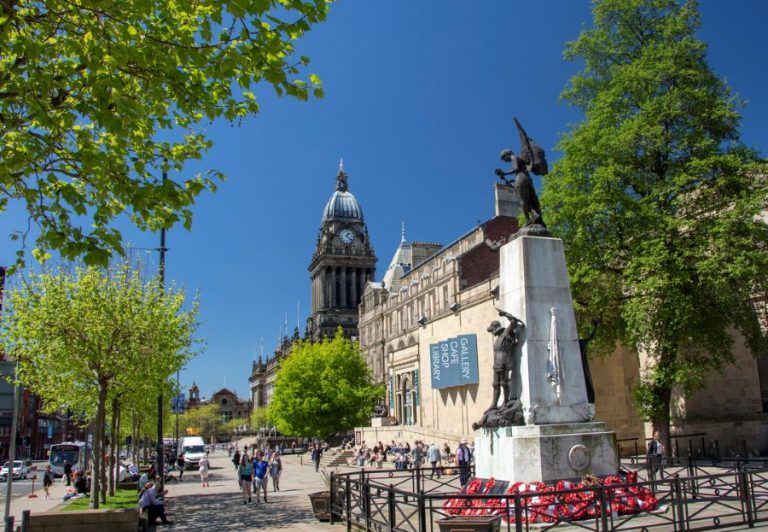
Four hundred years ago, Leeds was little more than a growing market town on the banks of the River Aire. In 2026, Leeds will celebrate a milestone unlike any in its history. Four hundred years ago, on July 13, 1626, King Charles I granted the town its Royal Charter, officially incorporating Leeds as a free borough with the power of self-government.
That historic moment laid the foundations for the modern city that Leeds would eventually become — a place shaped by innovation, industry, creativity and community spirit.
Today, Leeds stands as one of the UK’s most vibrant and culturally diverse cities, and the year-long #Leeds400 celebration will honor the remarkable journey of the city and its people. With 845,000 inhabitants, the City of Leeds is the third largest urban district by population in the UK, just behind Birmingham.
To mark the landmark anniversary, Leeds has launched a city-wide program of events and activities inviting everyone to take part in celebrating the city’s past, present and future. Museums, galleries, libraries, heritage sites and cultural venues across the city will join forces to tell the stories of the people, places and achievements that helped shape Leeds over the centuries.
But #Leeds400 is not simply about history. It is also about celebrating the organizations, communities and individuals who make Leeds thrive today, while looking ahead to the city’s future ambitions and opportunities.
City of pioneers and innovations
Leeds has long been a city of pioneers. In 1812, engineer Matthew Murray built the Salamanca, recognized as the world’s first commercially successful steam locomotive, on the Middleton Railway. A century later, aviation pioneer Robert Blackburn constructed Britain’s oldest surviving flying airplane — the Blackburn Type D — in Leeds in 1912.
The Yorkshire metropolis has produced world-changing innovators and global icons. Michael Marks opened his first penny bazaar at Leeds Kirkgate Market before building the retail empire that became Marks & Spencer. Scientists William Henry Bragg and his son carried out pioneering X-ray research at the University of Leeds that paved the way for the discovery of DNA’s structure. Benjamin Henry Latrobe, born in nearby Fulneck, later became the architect behind parts of the White House and the US Capitol Building.
Leeds has also been shaped by remarkable people whose achievements broke barriers and inspired generations. Cyclist Beryl Burton, born in Morley, became one of Britain’s greatest athletes, winning world titles and setting records that still stand today. Footballer Albert Johanneson made history as the first Black African player to appear in an FA Cup Final when he represented Leeds United in 1965. Leeds-born humanitarian Sue Ryder created a global charity supporting people with life-threatening illnesses and disabilities.
Strong culture and heritage
Culture remains at the heart of modern Leeds. From the grandeur of Kirkstall Abbey and Temple Newsam to the energy of Leeds Festival, Leeds West Indian Carnival and the city’s thriving sports scene, Leeds continues to celebrate diversity, creativity and inclusion. Institutions including Opera North, Northern Ballet, Leeds Grand Theatre and the Royal Armouries stand alongside community organizations, grassroots sports clubs and local arts groups.
The #Leeds400 celebrations will also shine a spotlight on the people and organizations driving Leeds forward today — from sports clubs and community groups to universities, innovators and businesses helping shape the city of tomorrow.
Most importantly, Leeds wants everyone to celebrate in their own way. Residents, communities, businesses and organizations are being encouraged to get involved and help create the celebration the city deserves.