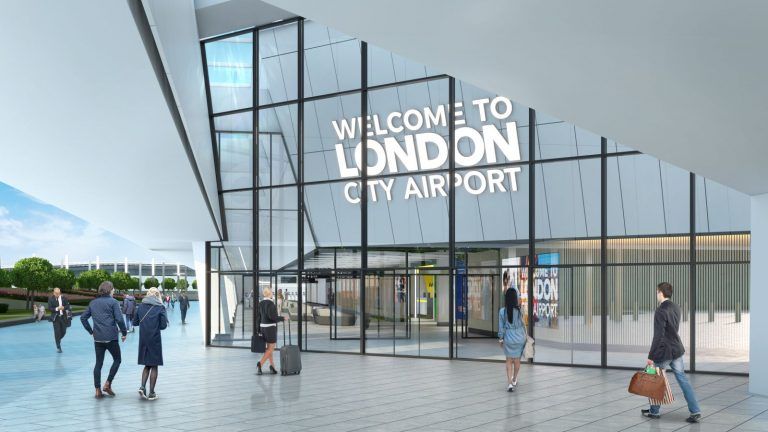
London City Airport has begun a public consultation on its future growth.
The airport’s Draft Master Plan 2020-2035 sets out ways it could respond to continued demand for air travel, in a sustainable and responsible way, over the next 15 years.
The move follows a 42% increase in passenger numbers at London City Airport in the last five years, and in the context of the capital’s rapid growth, especially in East London, where the rate of growth in population, housing, jobs and office space is faster than anywhere else in the city.
London City forecasts that, by 2035, 64% of its passengers will be leisure travellers, and 36% of passengers flying for business purposes.
The plan includes new forecasts, that by 2030, passenger demand to use London City Airport could increase to 9.8 million per year and to 11 million per year by 2035.
Based on these forecasts, current limits of 6.5 million passengers and 111,000 movements will be reached in 2022. London City Airport would remain the smallest of London’s five airports. Its total share in the London airport system would only increase from 2.7% currently to 4.3% in 2035.
The plan expects 80% of passengers to use public and sustainable transport to access the airport by 2035, and all airside vehicles to be electric or zero emissions by 2030
Airlines are being encouraged to accelerate investment in the latest generation of cleaner and quieter aircraft, while the airport is committed to achieve net zero carbon emissions by 2050.
The plan will also respond to demand by making best use of the existing runway and infrastructure with only limited further development required to 2035, beyond its current £500m City Airport Development Programme.
Specific examples include airfield upgrades, reconfiguration of existing stands to accommodate the latest generation of aircraft, and the potential for three additional aircraft stands above King George V Dock.
Potential adjustments to current operations are also being looked at, such as allowing more flexibility on the number of flights in the first and last half hours of permitted operations, the last half hour of permitted operations, for delayed take-offs or arrivals, and at weekends.
The 12-week public consultation ends on September 20.