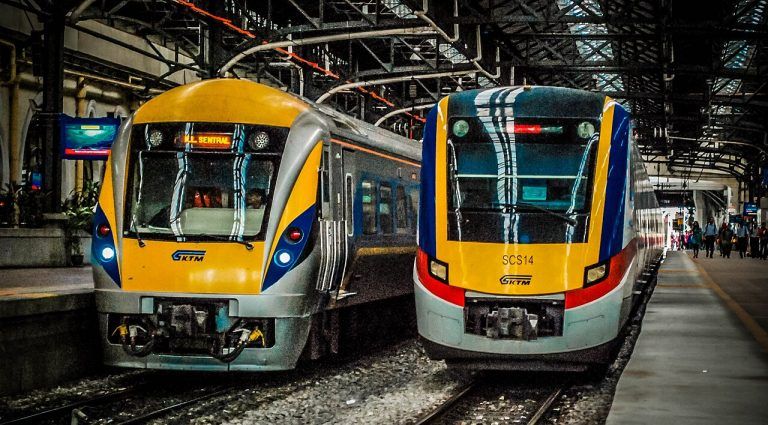
Malaysia is well-positioned to emerge as a leading rail nation in ASEAN through stronger collaboration, strategic investments, technological advancement, and ongoing talent development, according to the Transport Ministry to Malaysian news agency Bernama.
Deputy Transport Minister Datuk Hasbi Habibollah said the country’s rail agenda, guided by the National Transport Policy 2019–2030 and aligned with the 13th Malaysia Plan (RMK13), continues to focus on building an efficient, integrated, sustainable and resilient transport ecosystem.
“Rail plays a critical role in supporting economic growth, facilitating trade and logistics, improving urban mobility and connecting communities across the country,” he said when opening the International Rail Transit Forum (IRTF) 2026 in George Town on Monday (June 8).
He said the government’s “Road to Rail” strategy aims to increase the modal share of rail in both passenger and freight transport, creating a more balanced and sustainable transport system. The shift, he added, would help ease road congestion, improve logistics efficiency and strengthen Malaysia’s long-term economic competitiveness.
Hasbi noted that this commitment is reflected in several major infrastructure projects currently underway, including the Penang LRT Mutiara Line, the East Coast Rail Link (ECRL), and the Johor Bahru–Singapore Rapid Transit System (RTS) Link.
“The Penang LRT Mutiara Line will transform urban mobility in the state and support future economic growth, while the ECRL will strengthen connectivity between the east and west coasts of Peninsular Malaysia, unlocking new opportunities for trade, logistics and investment,” he said.
He added that the RTS Link will significantly enhance cross-border mobility between Malaysia and Singapore.
Hasbi said these projects demonstrate how rail infrastructure serves not only as a transport solution but also as a catalyst for economic transformation and regional development.
He also reaffirmed the ministry’s commitment to strengthening the rail industry through localization initiatives, technology transfer, research collaboration and human capital development.
As part of this effort, he highlighted the planned National Rail Centre of Excellence, to be led by the Malaysia Rail Development Corporation (MRDC), which will serve as a platform for industry development, talent nurturing, research, innovation and capability building across the rail value chain.
Commenting on the IRTF 2026, Hasbi said the forum provides an important platform for stakeholders to exchange ideas, share best practices and explore new opportunities for collaboration and innovation.
With the theme “The Great Shift: Paving the Road to Rail Excellence,” the forum brings together industry players, policymakers, academics and experts to discuss the future of rail transport and sector development.