Russia tries to rebuild its international tourism sector as its tourism industry continues to be affected by the geopolitical fallout from its invasion of Ukraine in 2022.
Russia recorded in 2019 nearly 33 million total international arrivals across all travel categories. Of this total, approximately 5.1 million were strictly international tourist.
While travel statistics remain incomplete and not always accurate, statistical sources in Russia indicate that the country welcomed last year around 4.8 million international arrivals with tourism-purpose arrivals only totaled 1.64 million trips.
European tourism nearly disappears
Before the Ukraine war, Russia attracted millions of European travelers every year, but the disappearance of direct air links, sanctions, logistical challenges and diplomatic tensions have dramatically reduced arrivals. Russia is also suffering from an extremely degraded public image among European citizens.
In 2025, European arrivals indeed remained a fraction of pre-pandemic levels with numbers reaching around 150,000.
In 2019, Germany alone generated over 560,000 arrivals, France 250,000 and the UK 195,000. In 2025, total arrivals from Germany reached 66,000, Italy visitors 10,500, while UK and French visitors topped 8,000 each. Many arrivals are linked to family visits rather than traditional leisure tourism.
With European demand weakened, Russia has shifted its focus toward China, the Middle East, and other Asian markets. Visitors from Gulf countries and the broader Arab world have become increasingly important for Moscow and other major destinations. Among the top five countries to Russia -beside China and Germany- are Saudi Arabia, Turkey, Turkmenistan, the UAE, and India.
China was by far Russia’s largest tourism market in 2025. Chinese visitors generated 834,460 tourist trips, more than 11 times the number from Saudi Arabia, the second-largest market. China accounted for over 50% of all tourism-purpose arrivals in 2025.
China tourism dominates but economic benefits remain limited
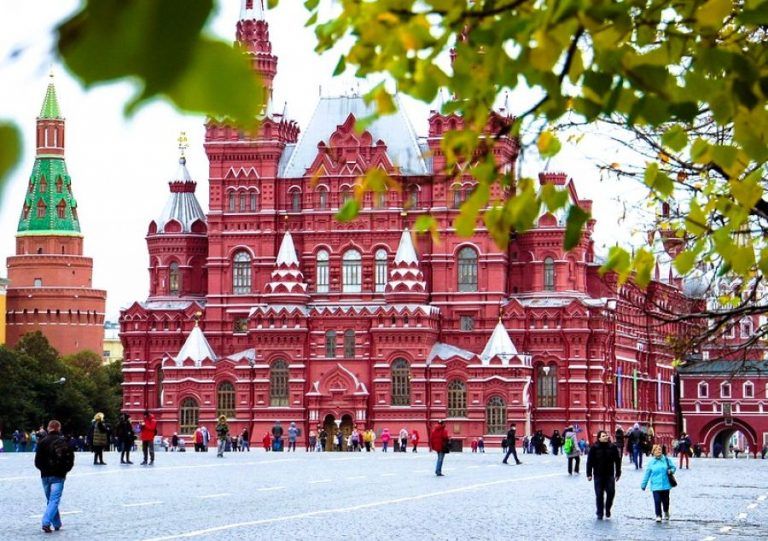
The increase follows the introduction of expanded visa-free group travel arrangements and a sharp decline in the cost of visiting Russia after the ruble weakened. Moscow and St. Petersburg remain the main destinations, with Chinese visitors typically joining seven- to nine-day package tours.
But while Chinese visitors have returned in large numbers, industry observers warn that the economic impact for Russia remains debated.
Russian tourism specialists argue that much Chinese group tourism is organized through Chinese travel agencies, with payments often processed through Chinese platforms and businesses, limiting the amount of spending retained by Russian companies. Retailers, restaurants or transportation remain firmly in the hands of China rather than entering the Russian economy.
Russian tourism operators complaint that many Chinese visitors spend relatively little outside the controlled tour system. Hotels, restaurants, souvenir shops, and tour services linked to Chinese companies receive a significant share of the revenue, while independent Russian businesses often see limited gains.
Experts argue that Russia needs to move beyond simply increasing visitor numbers and focus on capturing more tourism revenue locally.
They suggest that easier independent travel, improved visa access, and stronger support for Russian-owned tourism businesses could help spread visitor spending more widely.
For now, China remains the driving force behind Russia’s international tourism recovery, without becoming a truly economic catalyst…