Singlish, the colloquial creole English or dialect spoken in Singapore, is these days largely recognized as part of Singapore unique identity. It has not only been the case. It was long considered an embarrassment in Singapore government’s circles -especially by late Prime Minister Lee Kwan Yew.
The founder of independent Singapore declared once that “the more the media makes Singlish socially acceptable, by popularizing it in TV shows, the more we make people believe that they can get by with Singlish. This will be a disadvantage to the less educated half of the population.”
His words were followed by governmental action. In 2000, the government instituted a program called the Speak Good English Movement with the by-then PM Goh Chok Tong stressing that “If the younger generation speaks Singlish when they can speak good English, they are doing a disservice to Singapore”.
Times have changed and today, the Speak Good English Movement “recognises the existence of Singlish as a cultural marker for many Singaporeans. We aim to help those who speak only Singlish, and those who think Singlish is English, to speak standard English.”
Singapore main newspaper in (proper) English, the Straits Times, published an article where it acknowledges that Singlish is becoming increasingly embedded in everyday life in Singapore. More residents using the colloquial language regularly, including in the workplace, according to a new study by the Institute of Policy Studies (IPS).
The research found that Singlish proficiency and usage have risen steadily over the past decade, particularly among younger Singaporeans. Four in five respondents aged 18 to 35 said they speak Singlish well or very well, making it one of the strongest markers of local identity.
Singlish, the defining voice of Singapore
The study, based on a 2024 survey of 4,000 Singapore residents and compared with similar surveys conducted in 2013 and 2018, shows nearly half of respondents now identify most strongly with either English or Singlish. That figure has climbed from about one-third a decade ago.
Researchers said the growing embrace of Singlish reflects a broader shift in how Singaporeans define national identity. More than half of those surveyed agreed that Singlish gives Singaporeans a shared sense of belonging and represents an important part of the country’s culture.
Usage has also expanded beyond casual settings. More than half of respondents said they frequently use Singlish with friends, while 41.5% reported using it regularly at work, up from 34.7% in 2018.
Despite its growing popularity, researchers noted that Singaporeans generally recognize the need to switch between Singlish and Standard English depending on the situation. While Singlish is valued for building rapport and expressing local identity, formal English remains the preferred choice for official communication, public speeches, and international engagement. Tourists should then not be worried when asking a question to some locals in Singapore. Standard English will be used in return!
In fact, English proficiency continues to rise. About 80% of respondents reported speaking English well or very well, the highest level recorded since the survey began.
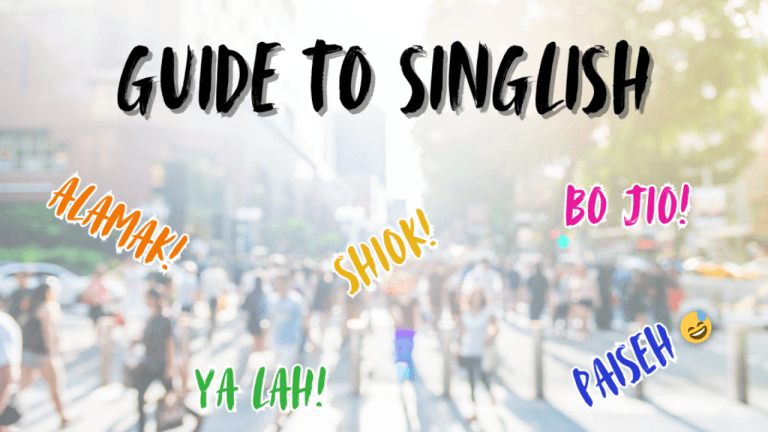
For visitors to the Island State, having a notion of Singlish can make a difference, particularly when establishing a relation with locals. Such as using ‘Lah’ at the end of a sentence which automatically makes it sounding so Singaporean. ‘Lah’ is just to stress a situation and could be translated as “is it” or “isn’t it”.
Researchers believe Singapore’s linguistic future will not be defined by English replacing other languages. Instead, they envision a multilingual landscape where English serves as a common language, mother tongues remain cultural anchors, heritage languages preserve community traditions, and Singlish continues to thrive as a uniquely Singaporean expression of identity. “So easy, lah! ”
*cakap: colloquial word in Malay, meaning chat or speak, widely used in Singlish.