
Cambodia is pinning its tourism recovery on stronger airline partnerships as international visitor arrivals continue to slide in 2026. According to the Ministry of Tourism, the country welcomed 1.54 million international visitors between January and May, down 47.8% from 2.95 million during the same period in 2025.
While the figures point to a dramatic downturn, much of the decline reflects the collapse in overland arrivals from Thailand following the border dispute between the two countries. Total crossings by land -also including land borders with Lao PDR and Vietnam- dropped by 69.5%.
This is particularly reflected for numbers to Siem Reap/Angkor. Cambodia’s iconic destination has experienced a 32% drop in total foreign arrivals as a large number of foreign -particularly Lao- travelers used to come by road from Thailand.
Looking at air travel arrivals, the decline is important but less dramatic. With 0.98 million international arrivals from January to May 2026, airports recorded a decline of 19.8%. Skyrocketing jet fuel prices and air fares explain mostly the drop as many airlines reduced their activity to preserve their financial balance.
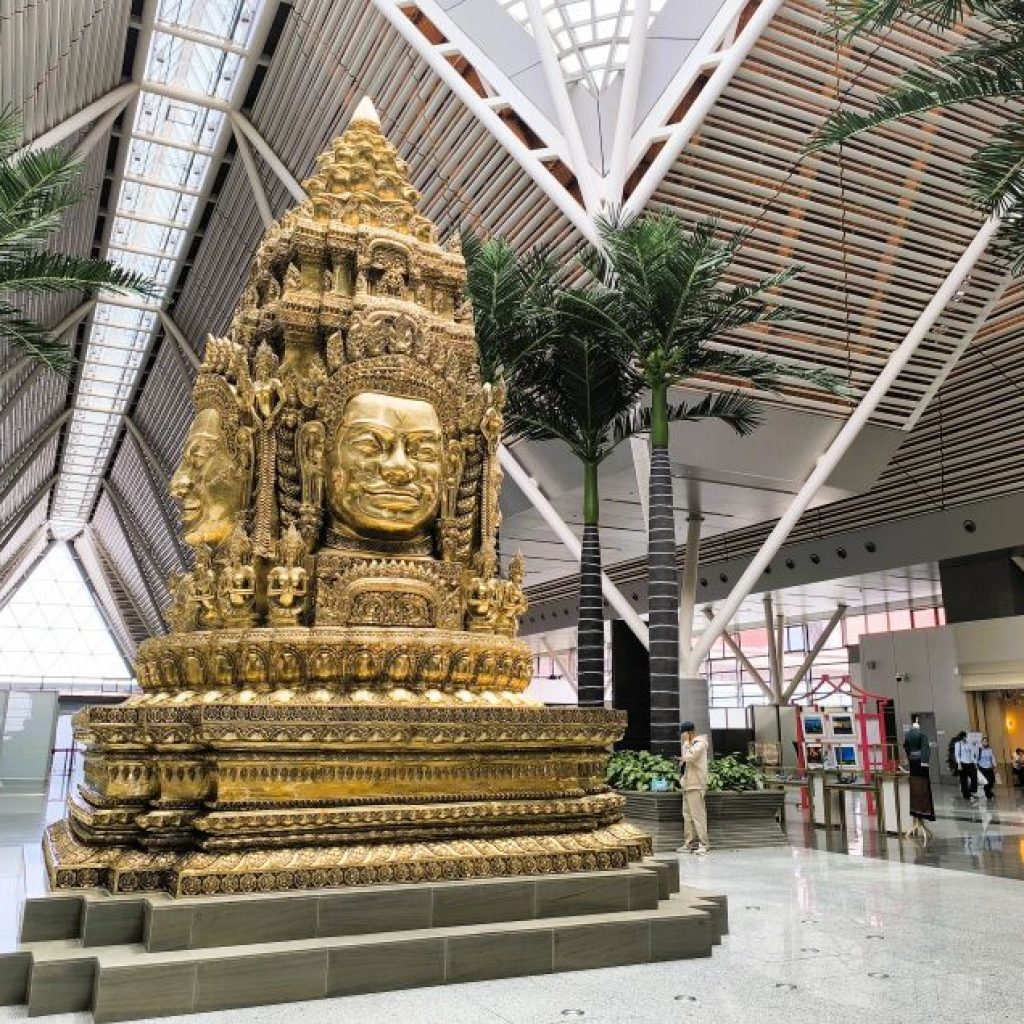 Siem Reap Angkor International Airport: impressive facility but mostly empty (Photo: LC/Cleverdis)
Stronger partnership with airlines
Faced with this declining trend, the Cambodia Tourism Board (CTB) is therefore shifting its marketing strategy toward strengthening air connectivity and stimulating demand from overseas markets.
CTB CEO Kim Minea said the board’s immediate priority is to work more closely with airlines to preserve existing routes and encourage further network expansion. More direct routes would indeed lower fares by boosting competition and avoid long transfers.
The CTB has already launched co-marketing campaigns with Singapore Airlines and AirAsia. Under the scheme, the tourism board matches each airline’s marketing investment, creating dedicated funds to promote Cambodia in selected source markets. The financial support can be used to launch new routes, increase flight frequencies or stimulate demand on existing services by improving load factors.
According to Kim Minea, airlines are among Cambodia’s most effective marketing partners because they have detailed customer databases and a deep understanding of traveler behavior. “It allows our campaigns to target potential visitors with far greater precision than traditional destination marketing,” points Minea.
The CTB will also maintain its incentive program for tour operators offering up to 500 USD per air ticket to participate in a fam trip.
“Seeing with your own eyes is the best way to win ambassadors for the destination. Firsthand experience remains one of the best ways to change international perceptions of Cambodia, which is still too often associated with security concerns or online scams,” he explains.
This is also why trips are planned for international media and influencers. “Journalists and content creators who visit the country typically leave with a far more positive impression and frequently generate more coverage than originally anticipated,” adds Minea.
Inbound operators have responded positively, although Minea acknowledges that rebuilding demand across Asia remains the biggest challenge as several regional markets continue to recover more slowly. Fam trips to Cambodia are still available, particularly for interested European tour operators.
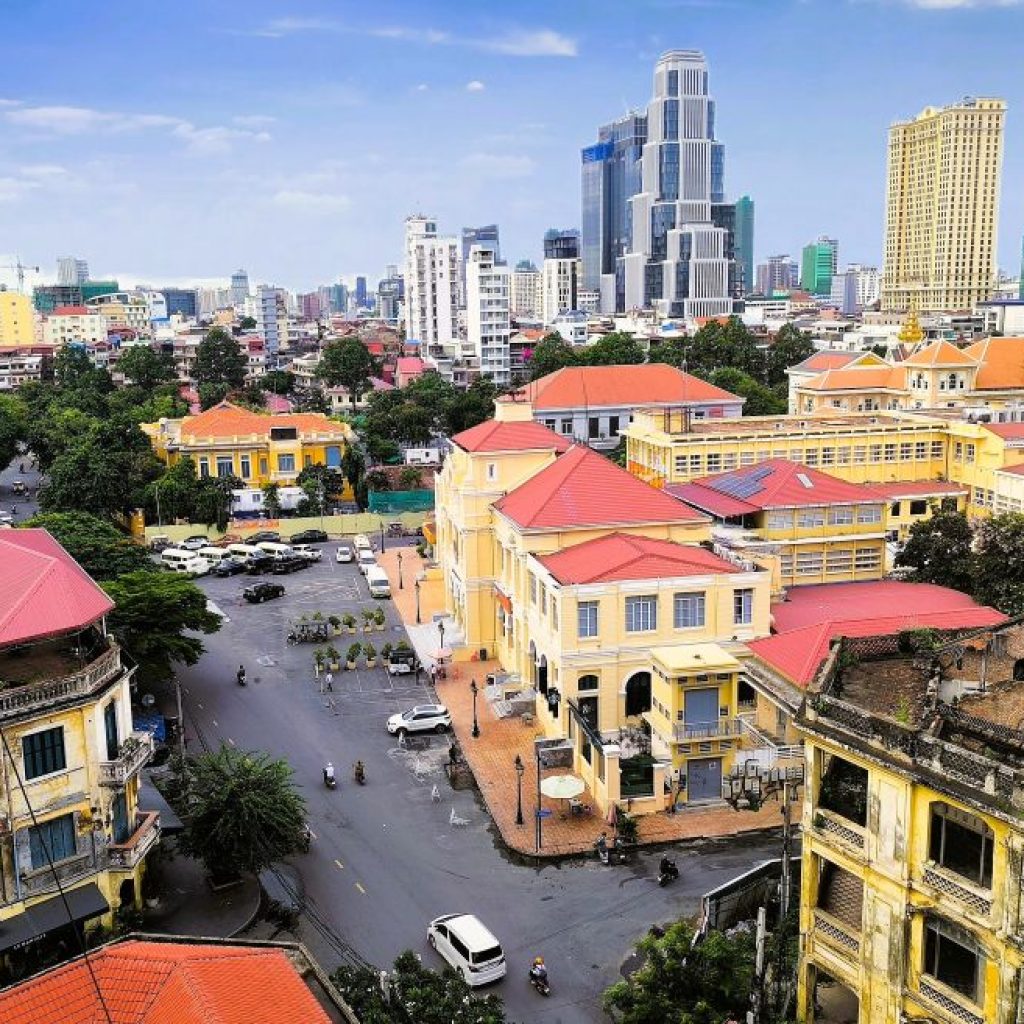 Phnom Penh to be promoted as a city-break destination
(Photo: Phnom Penh former French district-LC/Cleverdis)
Reshaping the image
Beyond marketing, Cambodia is seeking to diversify its tourism image. While Angkor, Siem Reap and Phnom Penh remain the country’s flagship destinations, the CTB wants to showcase coastal provinces such as Kampot and Kep. Minea believes Kampot has the potential to develop into a destination comparable with Bali, Chiang Mai or Luang Prabang, thanks to its preserved heritage, gastronomy, riverside setting and authentic atmosphere.
The CTB is also working to reposition Phnom Penh as a true city-break destination. The office is identifying around 100 “hidden gems” across the capital, including art schools, historic buildings, cafés housed in landmark structures designed by renowned architect Vann Molyvann, creative neighborhoods and lesser-known cultural venues. The initiative aims to provide visitors with more reasons to extend their stay and discover a broader side of Cambodia beyond its world-famous temple heritage.
How about the visa issue?
Surprisingly, the Cambodian government has so far showed reluctance to give free visa on arrivals, certainly an efficient way to boost rapidly tourism. Beside ASEAN nations, which benefit free visa on arrivals, China travelers are the only ones to benefit of a free visa for 14 days during the so-called “green season” (low-season from May to October). Cambodia remains with Indonesia, Laos and Myanmar among the countries requesting most foreign travelers to purchase a visa.
It means that potential travelers from the region such as expats need to purchase a visa each time they enter Cambodia, including for multi-countries itineraries. “A two-entries visa could already be a first step to allow more flexibilities for travelers. This needs to be discussed with our government,” recognizes Minea.