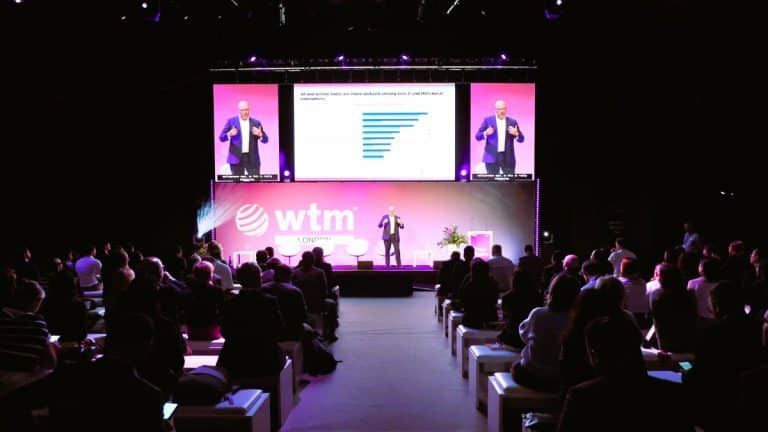
In other presentations, Qais Amori from Almosafer talked about AI’s fraud detection capabilities (when the fraudsters themselves are using AI); Melissa Skluzacek from easyJet said that AI is used across all its commercial and operational functions and is seen as an extra pair of hands; Sally Bunnell from NaviSavi explained how it is using AI to help curate, tag and profile its user generated content, with embedded booking options, to make it usable by brands who want to license it.
AI globally positive
Meanwhile, Filip Filipov from OAG identified a potential major IA headache which resonated with a travel tech audience.
The last of his 30-slides-in-300-seconds presentation addressed look-to-book ratios. OTAs currently gets one booking for every thousand views, he suggested. Looking ahead, large language learning models could return a look-to-book ratio of 60,000 to 1. When agentic AI becomes mainstream, he warned that this could be one million to one.
While AI was always likely to dominate proceedings, personalization was another recurring theme. Many panelists were keen to point out the difference between personalization and contextualization. This nuance comes from the idea that it is as important for travel companies to know why someone is traveling as well as who they are.
Timothy O’Neil Dunne, WTM London’s technology conference advisor, from consultancy T2Impact said: “Travel’s got a lot on its plate – war, disease, Trump – at the same time as generative AI is shaking up how we search, plan and experience travel, with agentic AI beavering away at the back.
“The Summit addressed many of these issues head on. The main takeaway from across all the panelists and sessions is that while disruptive change is inevitable, the travel technology industry is committed to making travel better for real people.”