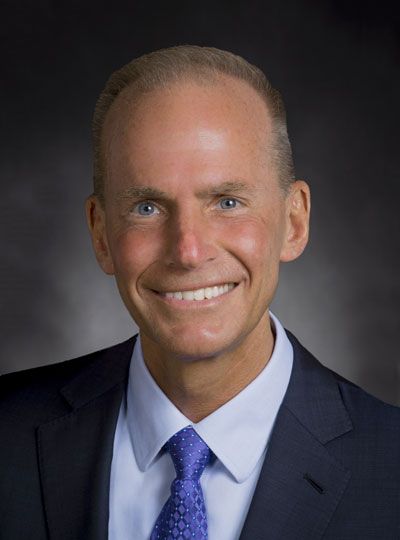
A shareholder bid to oust Boeing CEO Dennis Muilenburg as chairman of the Board has failed, gaining less than 40% of the vote.
Speaking at the company’s AGM in Chicago, Muilenburg vowed to ‘re-earn the trust’ of customers and passengers following two fatal crashes of Boeing 737s just five months apart.
His comments came shortly before Virgin Australia announced it had agreed with Boeing to defer deliveries of the 737 MAX aircraft from November 2019 to July 2021.
"We will not introduce any new aircraft to the fleet unless we are completely satisfied with its safety," said Virgin Australia chief executive Paul Scurrah.
However, Muilenburg has refused to admit that a system introduced on the MAX 8 aircraft was wholly to blame for the disasters.
He insisted that the system was only one factor in a chain of events that led to the crash of an Ethiopian Airlines’ flight near Addis Ababa and a Lion Air flight in Indonesia.
Muilenburg admitted that both accidents occurred because of faulty data from a sensor which triggered the plane’s Manoeuvring Characteristics Augmentation System (MCAS), designed to stop the plane from stalling by forcing the nose lower, but he said the MCAS system met its ‘design and certification criteria’.
He said a number of other scenarios may have contributed to the fatal accidents, including actions taken or not taken by pilots. He added: "As in most accidents, there are a chain of events that occur. It is not correct to attribute that to any single item."
All Boeing 737 MAX 8 aircraft have been grounded worldwide until the problem with the MCAS system is fixed.
A preliminary report into the Ethiopian Airlines flight found that the plane nosedived several times before crashing, whilst a report into the Lion Air crash suggested that the system malfunctioned, forcing the plane’s nose down more than 20 times before it plunged into the sea.
Boeing is testing a software update for MCAS.