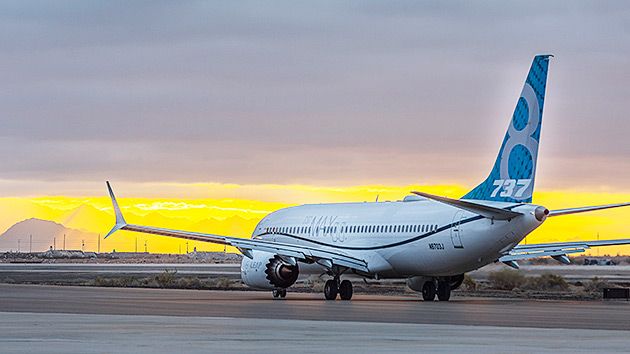
Boeing and flight safety authorities in the US have issued an alert to flight crews about potential erroneous readings from a sensor in its latest 737 Max 8 aircraft following last week’s Lion Air crash in Indonesia.
Boeing said it had issued an ‘Operations Manual Bulletin’ addressing flight crew procedures in cases where there is ‘erroneous input from an [Angle of Attack] sensor’.
The ‘angle of attack’ is the angle of the aircraft compared with oncoming wind.
The Federal Aviation Administration said ‘this condition, if not addressed, could cause the flight crew to have difficulty controlling the airplane and lead to excessive nose-down attitude, significant altitude loss and possible impact with terrain’.
"We are issuing this [airworthiness directive] because we evaluated all the relevant information and determined the unsafe condition described previously is likely to exist or develop in other products of the same type design," added the FAA.
"Due to the need to correct an urgent safety of flight situation, good cause exists to make this AD effective in less than 30 days."
The Lion Air flight crashed into the sea off Jakarta’s coast on October 29, killing all 189 onboard.
The ‘black box’ data recorder, recovered from the seabed, shows its airspeed indicator malfunctioned on its last four flights, investigators said on Monday.
"The FAA continues to work closely with Boeing, and as a part of the investigative team on the Indonesia Lion Air accident, will take further appropriate actions depending on the results of the investigation," the FAA added in a statement.
There are around 200 Boeing 737 Max aircraft in operation around the world.
Operators include Air China, American Airlines, China Eastern, China Southern, and Norwegian Air Shuttle,