Brazil has selected seven rural destinations to compete for UN Tourism’s Best Tourism Villages 2026 program, highlighting communities where tourism supports local economies while preserving cultural traditions, landscapes and ways of life.
The initiative recognizes villages that use tourism as a driver for sustainable development and heritage conservation. This year, Brazil’s nominees are Araçá (Santa Catarina), Conceição de Ibitipoca and Delfinópolis (Minas Gerais), Holambra and São José do Barreiro (São Paulo), Lençóis (Bahia), and Vila Flores (Rio Grande do Sul).
The winners will be announced in December in Buenos Aires, Argentina. Each selected project will receive US$15,000 to support international promotion.
The seven destinations join 268 candidates worldwide competing for the 2026 edition. Since the program launched in 2021, more than 1,000 villages from 100 countries have applied, while the Best Tourism Villages Network now includes 319 rural destinations.
If successful, the newcomers will join two Brazilian villages already recognized by the program: Testo Alto, in Pomerode, Santa Catarina, renowned for its half-timbered German architecture and the 16-kilometer Rota do Enxaimel heritage route, and Antônio Prado, in Rio Grande do Sul, celebrated for its Italian heritage, cuisine and the continued use of the Talian language.
The award is open to villages with fewer than 15,000 residents where agriculture, fishing, forestry or livestock remain central to community life. Judges assess cultural and natural heritage conservation, sustainability, governance, tourism infrastructure and the tangible benefits tourism delivers to local residents.
Seven villages with a strong identity
Brazil‘s seven nominees each present a different side of the country’s rural tourism offering.
On the Santa Catarina coast, Araçá is a traditional fishing village where artisanal fishing, seafood cuisine and coastal trails reflect generations of maritime heritage.
Nestled in the Serra da Mantiqueira, Conceição de Ibitipoca combines colonial charm with access to Ibitipoca State Park, famous for its caves, waterfalls and hiking trails.
Nearby Delfinópolis, bordering Serra da Canastra National Park, is known for waterfalls, adventure tourism and renowned regional products, including Canastra artisanal cheese and locally grown coffee.
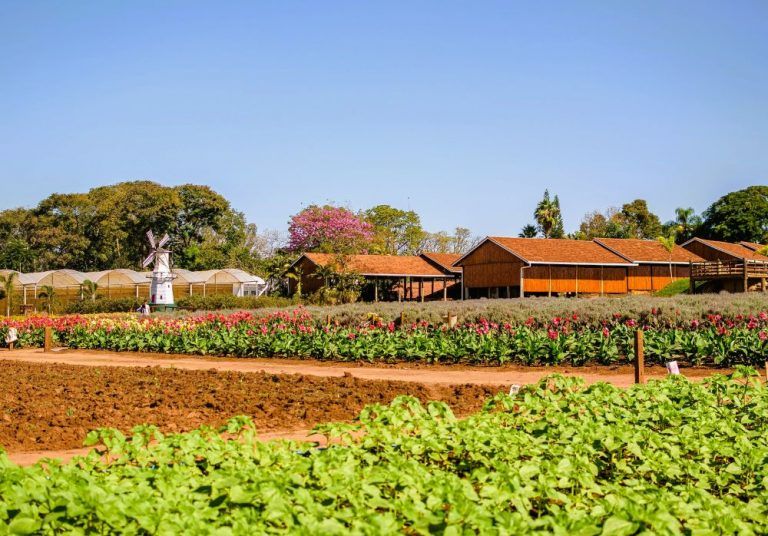
Holambra, often called Brazil’s Flower Capital, celebrates its Dutch heritage through flower production, architecture and annual festivals.
Historic Lençóis, the gateway to Chapada Diamantina National Park, offers visitors colonial streets, family-run inns and easy access to canyons, caves, rivers and spectacular waterfalls.
In the Serra da Bocaina, São José do Barreiro preserves historic coffee estates and stretches of Atlantic Forest while the historic Gold Trail retraces one of Brazil’s most important colonial trade routes.
Finally, Vila Flores, in Rio Grande do Sul’s Serra Gaúcha, keeps its Italian roots alive through rural tourism, traditional cuisine and the Filó Italiano, a community gathering inspired by the evenings once shared by farming families.
The seven candidates demonstrate how small communities can build internationally recognized tourism experiences without sacrificing their identity, while offering visitors authentic encounters.