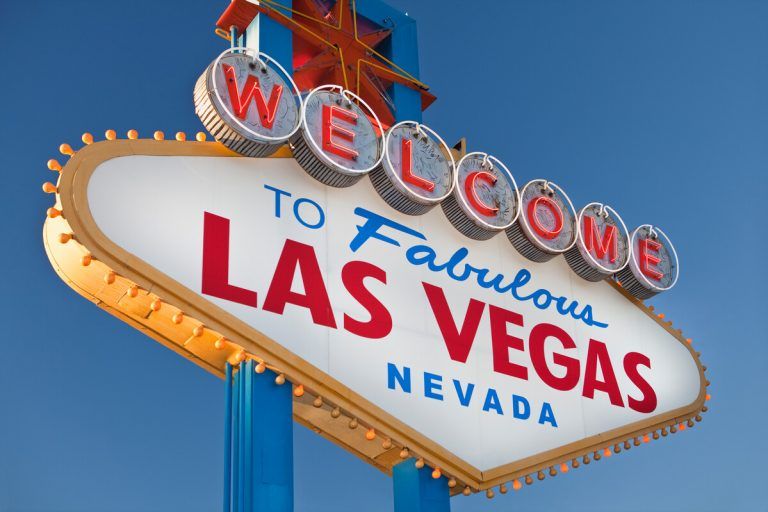
Las Vegas tourism sector is feeling the effects of a prolonged slowdown in leisure travel, with sightseeing operators reporting fewer customers and declining sales as overall visitation to the destination continues to weaken.
A new economic report prepared by Applied Analysis for the Las Vegas Convention and Visitors Authority (LVCVA) paints a challenging picture for the city’s tourism industry.
According to the report, Las Vegas welcomed 7.5% fewer visitors in 2025 compared with 2024, marking the lowest annual visitation since 2021, when travel was still recovering from the pandemic. it amounted to about 3.1 million fewer visitors, a figure which stands out because it is the largest annual drop since tracking began in 1970, excluding pandemic-related losses.
The decline was broad-based, with every month of 2025 recording fewer visitors than the corresponding month a year earlier. Visitor spending also slipped by nearly 8% year over year, reflecting both lower demand and more cautious spending by travelers.
LVCVA data highlights that spending on sightseeing activities dropped 20% between 2024 and 2025, making it one of the weakest-performing visitor categories. By comparison, gaming revenue continued to perform well, with visitor spending on gambling rising 11% during the same period.
The figures suggest that while visitors are still willing to spend inside casinos, they are cutting back on optional activities such as tours, attractions and entertainment purchased outside the resort environment.
International tourism appears to be another pressure point. Industry analysts have noted that international visitation to the US has softened amid economic uncertainty, a strong US dollar, a degraded US image abroad and changing travel patterns, reducing one of Las Vegas’ traditionally high-spending visitor segments.
Affluent travelers represent the majority of Las Vegas visitors
The LVCVA report also highlights a shift in the profile of Las Vegas visitors. In 2019, roughly 30% of visitors came from households earning at least $100,000 annually. By 2025, that figure had climbed to 75%.
While that indicates the destination is attracting more affluent travelers, it has not necessarily translated into higher spending across all sectors. Many higher-income visitors appear to be concentrating their spending on premium hotels, dining and casino gaming rather than sightseeing experiences.
One area that continues to provide stability is the meetings and conventions sector. Convention attendance held steady for the third consecutive year at approximately 6 million delegates, generating an estimated $10.7 billion in visitor spending.
In the meantime, the first five months of 2026 saw visitors number stabilizing : Las Vegas and surrounding cities recorded a total of 16,502,800 visitors, up 0.3% compared to the same period of 2025. Room occupancy was up 0.1 point to 82.7% during the first five months of 2026.