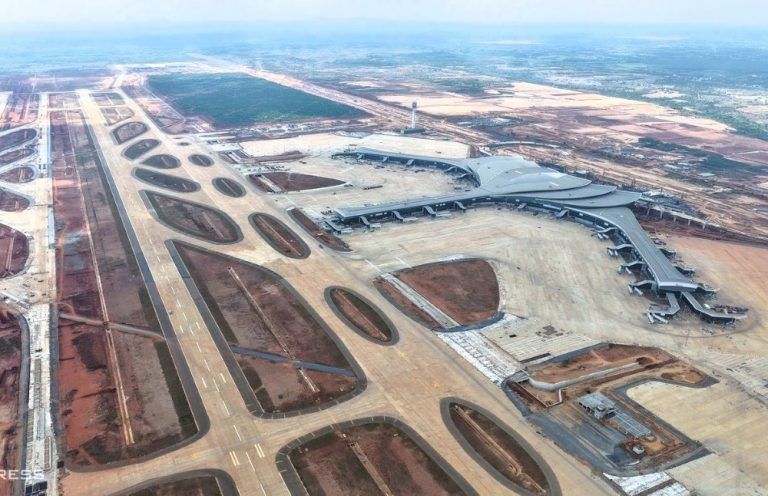
Vietnam is preparing to open Long Thanh International Airport on December 1, 2026, marking a major milestone in the country’s aviation expansion and setting the stage for a gradual transfer of most international flights from Ho Chi Minh City’s overloaded Tan Son Nhat Airport.
The VND336.63 trillion (US$12.8 billion) project is the largest and most expensive airport development in Vietnam’s history. Located some 40 km east of Ho Chi Minh City in Dong Nai Province, Long Thanh is expected to become the country’s primary international gateway while positioning Vietnam as a stronger competitor to major Southeast Asian aviation hubs.
State-owned Airports Corporation of Vietnam (ACV), which is developing the airport, aims to establish Long Thanh as a regional transit hub capable of attracting long-haul connecting traffic that currently flows through airports such as Singapore Changi, Bangkok Suvarnabhumi and Kuala Lumpur International.
The airport will initially accommodate 25 million passengers annually during its first phase, with future expansions eventually increasing capacity to 100 million passengers per year. The first phase is intended to relieve congestion at Tan Son Nhat Airport, which has operated beyond its designed capacity for years.
Phased transition of international flights
ACV has proposed a three-stage transition plan that would move more than 90% of Ho Chi Minh City’s international passenger traffic to Long Thanh by 2027.
Beginning December 1, 2026, the airport will handle all long-haul international services, cargo operations, newly launched international routes and additional frequencies. During this first stage, Long Thanh is expected to account for about 19% of the region’s international passenger traffic, while Tan Son Nhat will continue operating its existing international network but will not add new overseas routes.
Vietnam Airlines announced to plan shifting some 12% of its international flights from Ho Chi Minh City’s Tan Son Nhat Airport. While Vietjet has committed to operating at least two international routes from the mega air facility.
The second phase, running from March through October 2027, will see all flights to Europe, the Americas, Oceania, Africa, the Middle East, South Asia and Central Asia relocated to Long Thanh. Tan Son Nhat will continue serving Northeast Asia and Southeast Asia.
By the third phase, beginning in late October 2027, nearly all international flights will operate from Long Thanh. Only scheduled flights under 620 miles (1,000 kilometers) operated by Vietnamese carriers will remain at Tan Son Nhat.
Domestic operations will continue primarily from Tan Son Nhat, although airlines will have the flexibility to schedule flights at either airport based on market demand.
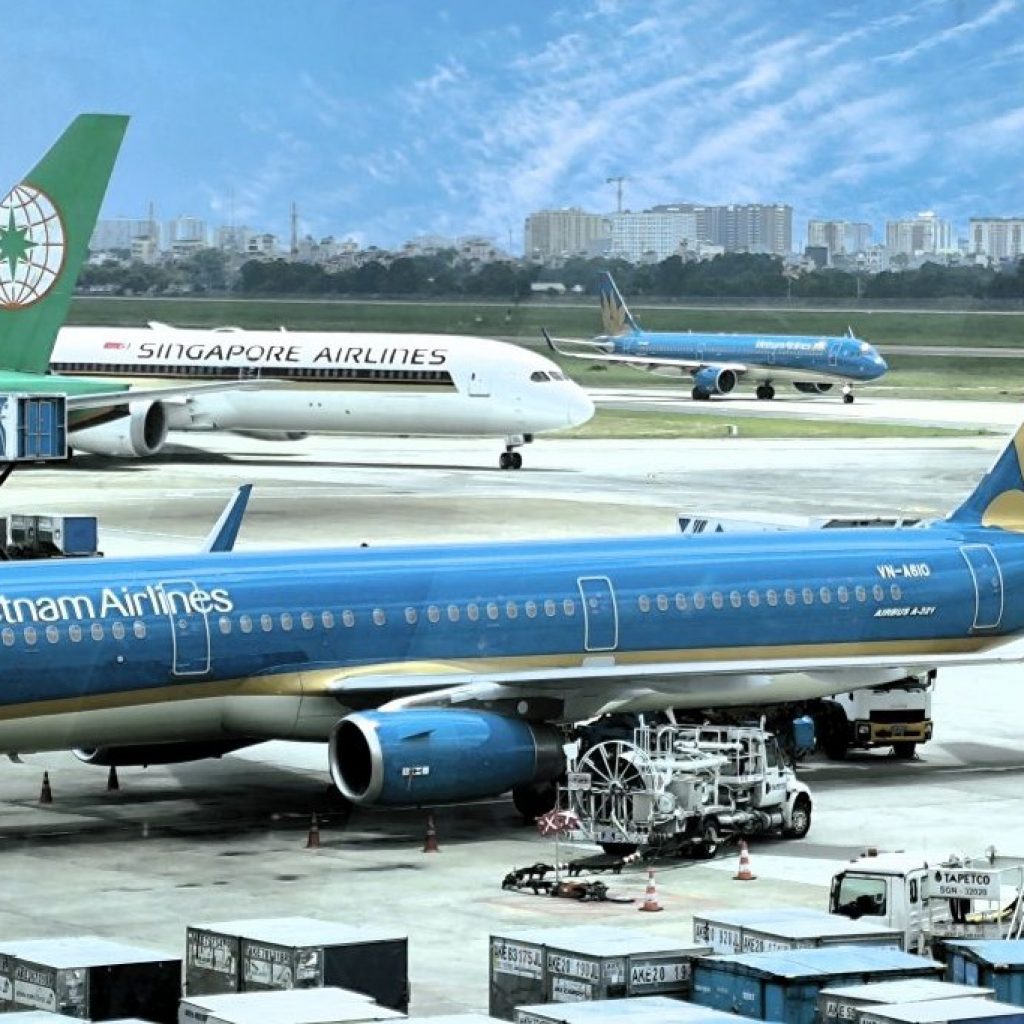 Current HCMC Tan Son Nhat airport is totally saturated (Photo: LC/Cleverdis)
New highway network supports airport access
To support the airport’s opening, Vietnamese authorities are accelerating several long-delayed road projects designed to improve access.
The largest is Provincial Road 770B, a US$179 million project stretching nearly 43 km. The new route will feature six vehicle lanes, two mixed-traffic lanes and a wide central median. It will connect eastern and northeastern Dong Nai with the Bien Hoa–Vung Tau Expressway and the Cai Mep-Thi Vai port complex as well as several major industrial parks.
Another key project, Provincial Road 773, represents an investment of over US$164 million. The nearly 39-km highway will link National Highway 1 with Ho Chi Minh City’s Ring Road 4 and will be expanded to six or eight lanes with a design speed of 80 km/h.
These projects, along with a third connecting route, have experienced years of delays due to land acquisition and planning issues. The government has instructed developers to complete the airport’s first phase and essential transport infrastructure before operations begin at the end of 2026. Vietnam Prime Minister even deployed hundreds of soldiers to help finish building its largest airport as contractors scramble to cover a shortfall of nearly 2,000 workers.
Nguyen Tuan Anh, deputy chairman of the Dong Nai People’s Committee, said the roads are essential to creating an integrated transportation network capable of supporting both passenger traffic and cargo movement once the airport becomes operational.
ACV is also urging authorities to accelerate other major infrastructure projects, including the expansion of the Ho Chi Minh City–Long Thanh Expressway, completion of the Bien Hoa–Vung Tau Expressway and Ho Chi Minh City’s Ring Road 3.
The airport’s opening represents one of Vietnam’s most significant transportation investments and forms part of the country’s long-term strategy to strengthen its position in the fast-growing Asia-Pacific aviation market while reducing dependence on neighboring regional hubs.