
Power returned to Spain early on Tuesday following a major blackout across the country, Portugal and parts of France.
The cause remains unknown.
Millions of people were impacted with flights and ground transport including metros and trains heavily impacted.
About 99% of power was restored by early morning, according to electricity operator Red Eléctrica.
The outage also shut down ATMs and phone coverage.
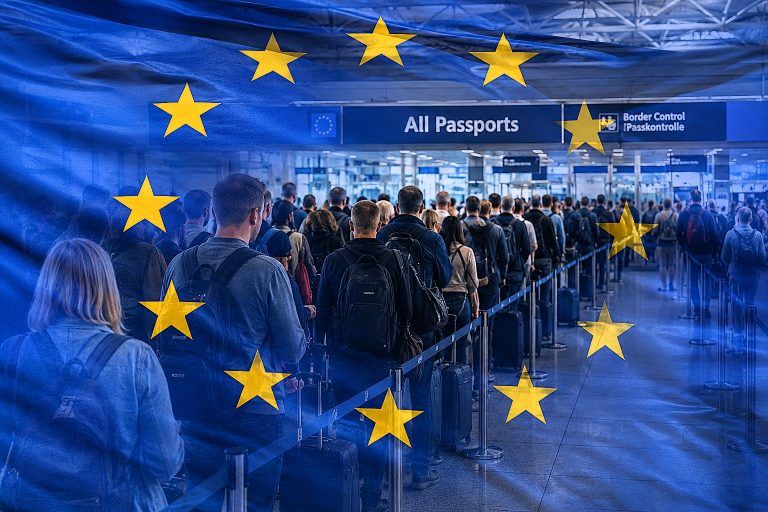
It left thousands stranded at airports across Iberia.
For many, the blackout last about 19 hours.
About 36,000 people had to be rescued from stranded metro trains in dark tunnels.
“We have never had a complete collapse of the system,” Prime Minister Sánchez said.
Portugal started restoring some power at substations after midnight on Monday.
Portugal’s National Cybersecurity Center said there was no evidence of a coordinated cyber attack on the national grid but that theory hasn’t been ruled out.
Enaire, Spain’s air navigation operator said flight operation capabilities were restored at the three main ATC control centres in Madrid, Barcelona and Seville.
Aviation analytics firm Cirium said on Monday, 185 flights departures and 187 arrivals were cancelled in Portugal with almost half of all departures cancelled at Lisbon Airport. Porto was also significantly affected.
More than 400 arrivals and departures were cancelled at Spain airports.
More than one-third pf flights out of Seville were cancelled.
Cirium said 11 flights departing the UK to Spain were also scrapped.
There were nearly 400 departures scheduled from UK airports to Spain and 105 to Portugal yesterday, Cirium said.
Additionally, the power outages should be a wake-up call for travel firms, says Maxim Sevastianov, CEO of post-booking automation firm Trava.
“Today’s events show how fragile travel operations still are when critical systems go down. Too many businesses rely on single-location hosting and manual processes that simply can’t cope with unexpected disruption.”
“Now is the time for travel companies to rethink their resilience: set up geo-redundant systems, automate your entire chain from ticket reissuance to proactive refunds, and eliminate manual gaps that slow down the response when passengers need it most,” Sevastianov added.