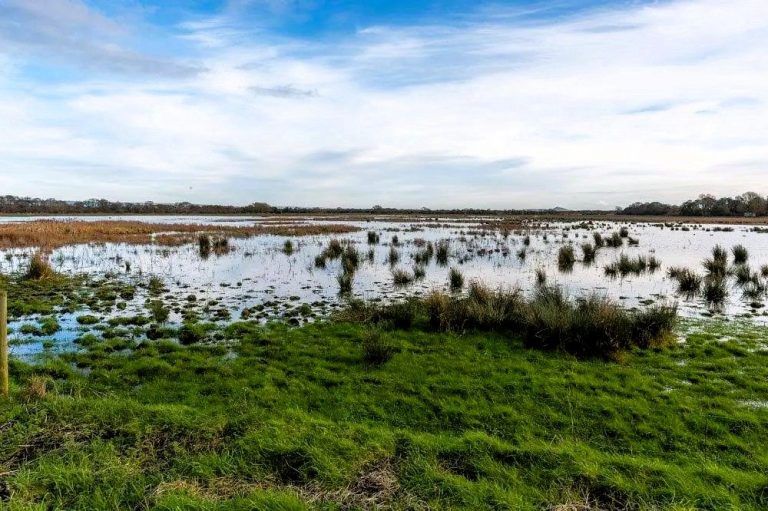
London Gatwick Airport has announced a £1 million investment in two major UK wildlife restoration projects designed to remove carbon emissions while delivering long-term benefits for biodiversity, flood resilience and local communities.
The airport operator has partnered with Kent Wildlife Trust and Somerset Wildlife Trust through not-for-profit organization Wilder Carbon, which connects businesses seeking to strengthen sustainability initiatives with environmental groups delivering nature-based climate solutions.
The investment will support habitat restoration projects at Ironhurst Valley Nature Reserve in Kent and Honeygar Farm in Somerset. Together, the schemes are expected to remove 10,000 tonnes of carbon dioxide equivalent (CO2e) from the atmosphere over time.
The initiative builds on Gatwick’s long-standing environmental credentials. The airport has been awarded the Wildlife Trusts’ Biodiversity Benchmark for 11 consecutive years, reflecting its industry-leading approach to biodiversity management.
The restored sites will transform degraded former agricultural land into species-rich habitats. Beyond capturing carbon, the projects will enhance wildlife populations, improve soil health, help alleviate flooding and provide lasting environmental benefits for surrounding communities.
The carbon removals generated by the projects will be used to offset residual emissions from Gatwick’s own operations between 2030 and 2039. These are emissions that cannot currently be eliminated despite the airport’s extensive decarbonization efforts.
The investment follows Gatwick’s £250 million capital program aimed at reducing emissions across its operations and supports its commitment to achieve net-zero Scope 1 and Scope 2 emissions by 2030.
“We have an unwavering commitment to sustainability and achieving our goal of net zero emissions under our direct control by 2030,” said Mark Edwards, Head of Sustainability at London Gatwick. “While we are making significant progress in reducing our carbon footprint, some emissions sources will remain. Supporting high-integrity, nature-based carbon removal projects enables us to address those residual emissions while delivering wider environmental benefits.”
At Ironhurst Valley, arable and pasture land will be converted into species-rich grassland, wet floodplain meadows and mixed deciduous woodland, creating substantial biodiversity gains alongside carbon sequestration.
Somerset Wildlife Trust CEO Georgia Dent said the partnership demonstrates how responsible organizations can invest in high-quality projects that both lock away carbon and restore nature at scale.
The investment also aligns with wider industry efforts. London Gatwick is a member of Sustainable Aviation, the UK aviation coalition committed to achieving net-zero carbon aviation. Earlier this year, coalition members pledged more than £2 million toward greenhouse gas removal credits to help accelerate development of the carbon removal market.
Gatwick’s latest sustainability achievements include the introduction of electric passenger buses, development of the UK’s first on-airport recycling facility for uncontaminated airline cabin waste, and more than 675,000 student educational engagements delivered since 2021.