India is preparing to enter the high-speed rail era, with its first bullet train service expected to become fully operational by 2028 on the Mumbai-Ahmedabad corridor.
The ambitious project, India’s first dedicated high-speed rail line, will connect Mumbai in Maharashtra with Ahmedabad in Gujarat across a 508-kilometer route.
The National High-Speed Rail Corporation Limited (NHSRCL) is developing the corridor with Japanese cooperation, using technology inspired by Japan’s Shinkansen bullet trains.
While earlier plans targeted earlier openings, construction delays linked to land acquisition, engineering challenges and infrastructure development have pushed the timeline. Recent updates indicate that sections of the line are expected to open earlier, with full corridor operations planned in phases.
The first operational stretch is expected to cover part of the Gujarat section before the complete Mumbai-Ahmedabad route begins service.
Once fully launched, the bullet train is expected to cut travel time between Mumbai and Ahmedabad to around two hours, compared with current rail journeys that can take more than six hours. Trains would ride at a speed of 320 km/h.
The project includes major engineering features, such as India’s first undersea rail tunnel, elevated sections and advanced signaling systems designed for high-speed operations.
Boost for tourism and business travel
The new rail link is expected to reshape domestic tourism by improving access between two of India’s largest economic centers. Mumbai, as a global financial hub and gateway for international visitors, will gain faster connections to Gujarat destinations including Ahmedabad, Vadodara and Surat.
The future high-speed rail is likely to become a potential catalyst for weekend travel, business tourism and regional exploration by both domestic and international visitors.
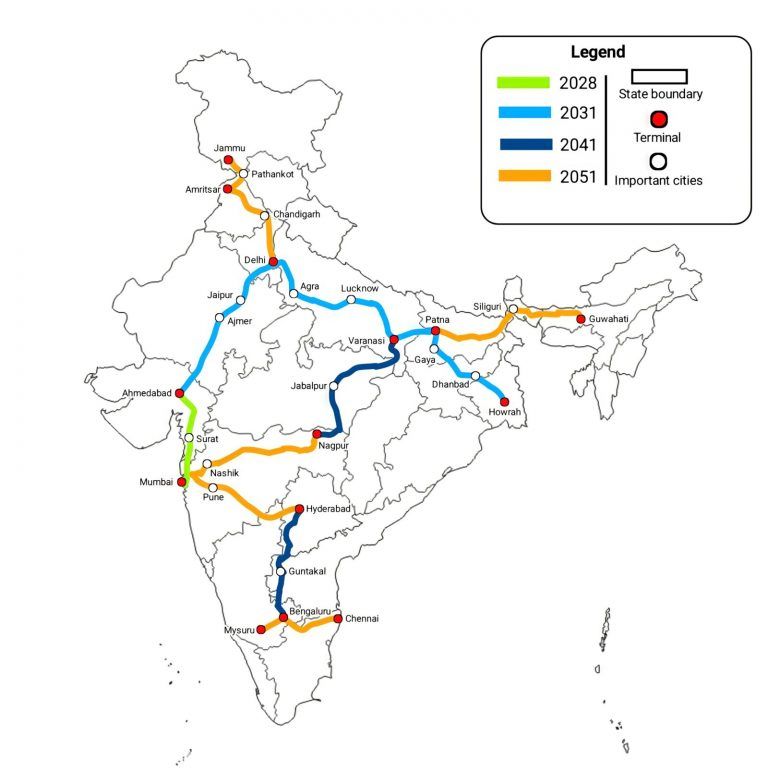
India is also planning additional high-speed rail corridors, including routes linking other major cities, as part of a wider modernization of the country’s transportation network.
The Mumbai-Ahmedabad bullet train represents then a major milestone for India’s rail ambitions and could mark the beginning of a new era of faster, more connected travel across the country.
India has indeed identified a network of seven initial high-speed rail corridors covering more than 4,000 kilometers. It comprises among others Delhi–Agra-Lucknow-Varanasi; Mumbai-Nagpur; Delhi–Ahmedabad; Chennai-Bengaluru-Mysore; Delhi–Amritsar and Mumbai-Hyderabad. The 800-km Delhi–Varanasi corridor is likely to be the next high speed rail line to be developed.