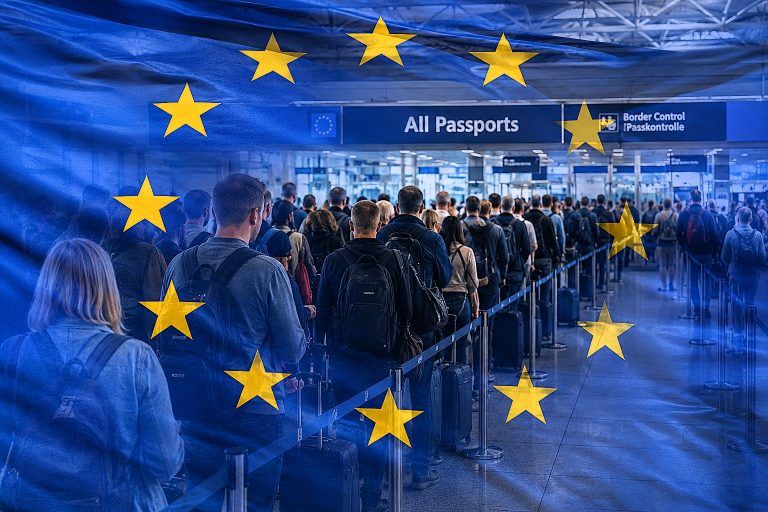
Canadian travelers going through Toronto to enter the US are now finding security clearances can take longer than their flights. Is that a trend that may move to the US?
Don’t rule it out, say airline experts.
To get through airport security in Toronto for a flight to the United States, passengers go through eight different screening lines or ID checks, says The Wall Street Journal.
“Since the Dec. 25 bombing attempt, travelers headed to the US have faced much tighter security. New rules issued by the federal government dictate that a majority of inbound travelers have to undergo individual searches, once a dreaded rarity for passengers,“ writes the Journal.
The searches by the Transportation Security Administration (TSA) can include pat-downs, emptying out carry-on luggage and even leafing through wallets and personal papers.
Those rules are likely to stay in force for a long time, officials say. It could be months or even years before high-tech devices such as body scanners replace frisking, for example.
"If you’re coming inbound to the US, it’s going to be a tough summer unless we get some creative change in the security rules," said Steve Lott, a spokesman for the International Air Transport Association, a Geneva-based group that represents airlines around the world.
So far, the delays of three hours and more that became common at international airports in the weeks after the bombing attempt have subsided. But passengers are told to show up early for flights to the US—often three hours or more, even for 90-minute flights from Canada and Mexico.
The TSA says in US airports, it has increased use of explosive trace detection. Coming next: agents will begin swabbing passengers’ hands to check for explosives.
Passengers are questioning the safety of the new security measures.
"They want to give the appearance that they are doing something. What would be nice to know is the success rate of various procedures,” said Sam Goldstein, a psychologist who travels about 150,000 miles a year.
By David Wilkening