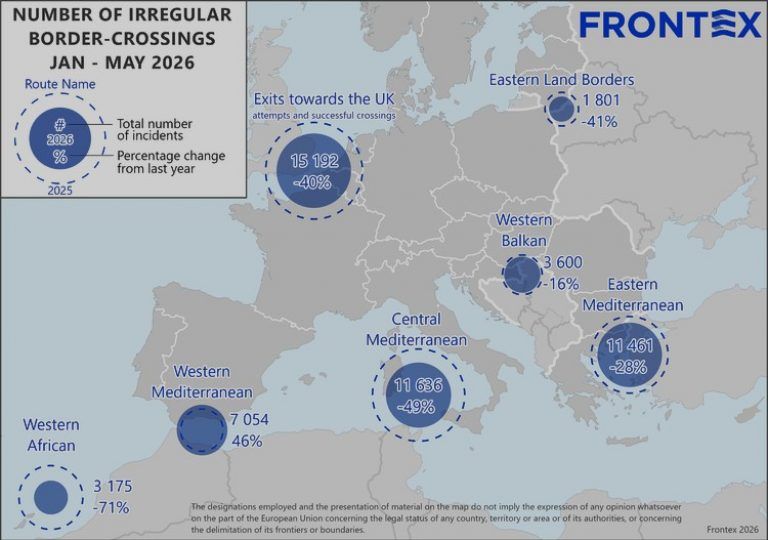
Irregular border crossings into the European Union fell by nearly 40% during the first five months of 2026, according to preliminary figures from Frontex, the European Border and Coast Guard Agency.
Almost 39,000 illegal crossings were detected between January and May, continuing a downward trend driven by closer cooperation with partner countries and tougher preventive measures in major migrant departure states.
The Central Mediterranean and Eastern Mediterranean remained the EU’s busiest migration corridors, together accounting for roughly two-thirds of all irregular arrivals.
The Central Mediterranean recorded around 11,600 arrivals, nearly half the number seen during the same period in 2025. Although detections increased in May as calmer weather encouraged more sea crossings, overall traffic remained well below last year’s levels. Most migrants departed from Libya, with Bangladeshi, Somali and Sudanese nationals making up the largest groups.
The Eastern Mediterranean registered approximately 11,500 crossings, down 28% year over year. The route from Libya to the Greek island of Crete remained the most active, followed by arrivals on the Aegean islands and crossings at the land border with Türkiye.
The Western Mediterranean was the only major migration route to experience growth. Frontex recorded about 7,100 detections, a 46% increase compared with last year.
According to the agency, the rise reflects changing smuggling patterns. Increased border controls in Morocco and tighter enforcement along the Western African and Central Mediterranean routes have redirected many departures toward Algeria, with Spain’s Balearic Islands becoming a primary destination.
Meanwhile, the Western African route experienced the sharpest decline. Crossings fell 71% to around 3,200 after Mauritania introduced tougher preventive measures in spring 2025, followed by similar efforts in Senegal and The Gambia in cooperation with Spain and the EU.
Frontex cautioned that smuggling networks remain highly adaptable, meaning migration flows could shift rapidly if conditions change.
Crossings toward the UK also declined significantly. Attempts to leave France across the English Channel dropped 40% to approximately 15,200. The figures include both migrants who successfully reached the UK and those intercepted before departure. A new UK-France agreement signed in April is expected to strengthen coastal patrols further in the coming months.
The latest figures coincide with the rollout of the EU Pact on Migration and Asylum, which introduces a standardized screening process at the bloc’s external borders.
Frontex officers are assisting member states with key procedures, including identity checks, nationality verification, biometric registration and document inspections.
“From today, everyone arriving at Europe’s external borders will need to be identified, registered and screened to the same standard, wherever they are,” said Hans Leijtens, Executive Director of Frontex. “The Pact turns 27 different ways of doing things into one, and Frontex officers are on the ground from day one to help make it work.“
Frontex currently has about 3,800 officers deployed across the EU’s external borders, supporting national authorities with border security operations and search-and-rescue efforts at sea.