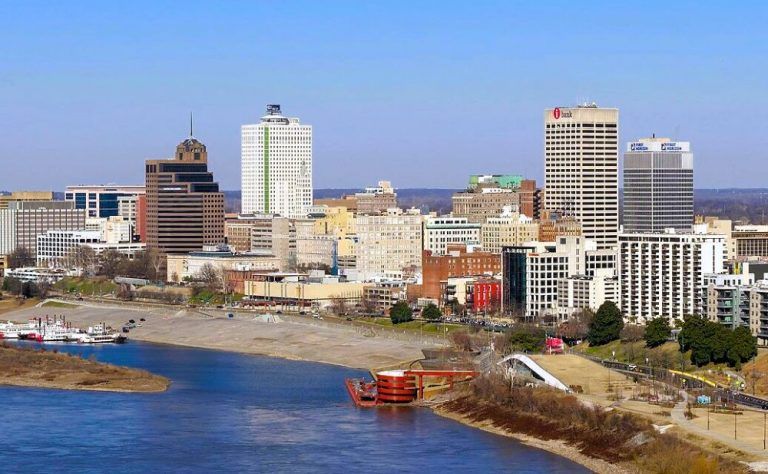
Downtown Memphis is undergoing one of its most ambitious tourism and hospitality transformations in decades as city leaders invest heavily in convention facilities, hotel upgrades and mixed-use developments. They are all designed to restore the destination’s competitiveness in the U.S. meetings market according to a market report of hotel consulting company HVS.
After the COVID pandemic dealt a significant blow to hotel demand and visitor numbers, Memphis has launched a long-term strategy to revitalize its downtown core, attract larger conventions and create new opportunities for tourism investment.
At the center of the strategy is the Renasant Convention Center, which reopened in 2021 following a $230 million modernization. Originally closed in 2018, the venue was completely redesigned to better compete with major convention destinations across the United States.
The renovated facility now features a 118,000-m²column-free exhibition hall—the largest in the region—which can be divided into three separate event spaces. It also offers 46 meeting and breakout rooms equipped with modern technology and flexible layouts to accommodate a wide variety of conferences and corporate events.
Although its reopening coincided with the pandemic, limiting its initial recovery, the convention center has quickly gained momentum. During the 2022-23 fiscal year it generated an estimated economic impact of $60 million, making it the strongest financial year in the venue’s history. Management continues to focus on attracting more corporate meetings while maintaining its established SMERFE business base.
City officials say the biggest obstacle to further growth is the shortage of quality hotel accommodations close to the convention center. While Downtown Memphis has welcomed several upscale hotels in recent years, the immediate area surrounding the venue has lacked the full-service hospitality infrastructure expected by large convention groups.
Memphis major hotel redevelopment projects
The iconic Peabody Memphis completed an $18 million renovation of all 464 guestrooms in September 2025. The refurbishment modernized guestrooms and bathrooms, reinforcing the hotel’s position as one of the city’s premier luxury properties. The upgrade forms part of a wider $130 million city-backed preservation program designed to secure the hotel’s future over the next three decades.
Meanwhile, the city has taken ownership of the former Sheraton Memphis Downtown, the largest hotel in Memphis with more than 600 guestrooms. Directly connected to the convention center via an enclosed skywalk, the property has long served as a cornerstone for group business but had become outdated after years of deferred maintenance.
Renamed the Memphis Riverline Hotel, the property is now undergoing an extensive renovation expected to be completed by 2029. Plans include fully redesigned guestrooms, upgraded public areas, expanded ballroom and meeting facilities, a new 400m² restaurant and bar, an onsite Starbucks and nearly all-new furnishings. Once completed, city leaders intend to rebrand the hotel under the Marriott flag.
The improvements come as tourism performance begins to recover. According to local officials, Downtown Memphis recorded higher hotel occupancy during the first months of 2026 compared with the same period a year earlier. Memphis Tourism also reports visitor numbers rebounded during late 2025 after two difficult years and continue to improve.
Looking further ahead, Downtown Memphis is preparing for even larger changes. The proposed $9.4 billion Neural Nexus mixed-use development will bring a cloud computing campus, approximately 700 residential units, an 800-room hotel and extensive retail space. The project is part of a broader wave of investment that saw a reported $23.7 billion in capital projects announced across Memphis during 2025.
With a modern convention center, upgraded hotel inventory and a growing pipeline of mixed-use developments, Memphis is positioning itself for a stronger future in meetings, conventions and business tourism. According to HVS creating new opportunities for hotel operators and investors seeking long-term growth in the downtown market.