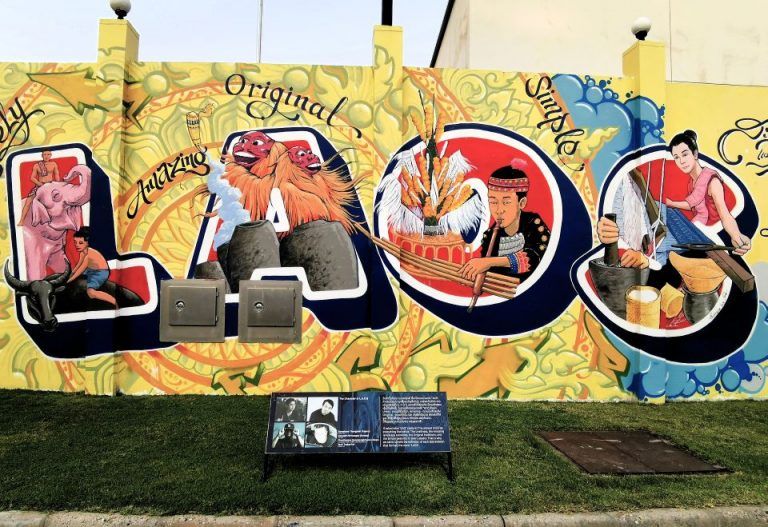
Laos is ramping up efforts to turn its rich cultural heritage into a stronger driver of tourism and economic growth with the launch of a new national cultural organization.
The Lao People’s Revolutionary Party’s Central Committee has approved the creation of the Lao Cultural Values Promotion Association (LCVPA), a new body that will promote the country’s cultural identity while supporting creative industries, heritage conservation, and tourism development.
Association president Savanhkhone Razmountry said the organization will help transform Lao culture into both a “creative economy” and a “cultural economy,” creating new opportunities for artists, performers, writers, cultural entrepreneurs, and local businesses.
He noted that cultural attractions already draw between four and five million visitors annually, highlighting the growing role of heritage tourism in the country’s visitor economy.
The association plans to work closely with UNESCO and other international partners on heritage conservation projects while seeking technical expertise and funding to preserve cultural assets and expand creative initiatives. It will help develop new cultural products while supporting the country’s broader economic goals.
The launch is part of a wider government strategy to raise Laos’ international cultural profile and strengthen its appeal as a tourism destination.
Earlier this year, Laos nominated its national dish, Larb, for UNESCO Intangible Cultural Heritage recognition. Authorities are also preparing a nomination for the traditional Su Khuan (Baci) blessing ceremony.
Speaking at the inauguration, Visouk Phomphithak, Deputy Head of the Party Central Committee’s Organization Commission, urged the association to deliver practical projects that showcase Lao culture to international audiences while protecting traditional values amid increasing global cultural exchange.
While the government sees the new association as a catalyst for expanding creative industries and cultural tourism, details on its long-term funding and staffing have yet to be announced.
Tourism continues to climb
The announcement comes as Laos enjoys another year of strong tourism growth.
The country welcomed nearly 2.6 million international visitors during the first half of 2026, a 9.9% increase compared with the same period last year, according to the Tourism Development Department under the Ministry of Information, Culture and Tourism.
Thailand remained Laos’ largest inbound market with 833,738 visitors, representing 32.2% of total arrivals. China accounted for 26.1%, followed by Vietnam with 22.6%.
Together, the three neighboring countries generated more than 2 million arrivals, representing around 81% of all international visitors during the first six months of the year.
ASEAN markets supplied almost 1.47 million travelers, while the Asia-Pacific region contributed more than 813,000 visitors, largely driven by demand from China. Europe added just over 222,000 arrivals.
Visitor numbers have continued to strengthen throughout the year. Laos received 1.36 million tourists in the first quarter, up 7.9% year-on-year. Although arrivals briefly softened in February, demand recovered in March and continued rising through June.
If current trends continue, Laos is on course to achieve its 2026 target of welcoming between 5 million and 6 million international visitors.
Long-term tourism ambitions
The strong first-half performance builds on a record-breaking 2025, when Laos welcomed 4.58 million international tourists, an 11% increase over 2024 and well above the government’s target of 4.3 million visitors.
Tourism accelerated during the second half of 2025 after visa policy changes introduced under the Visit Laos Year campaign and growing passenger demand on the Laos-China Railway boosted arrivals from China.
Looking ahead, the government has adopted an ambitious tourism strategy for 2026-2030. The plan aims to attract 43 million visitors over five years, including 22 million international travelers and 21 million domestic trips, while generating at least US$13 billion in tourism revenue.
International visitors are expected to contribute more than US$8 billion, with average stays projected at around 10 days.