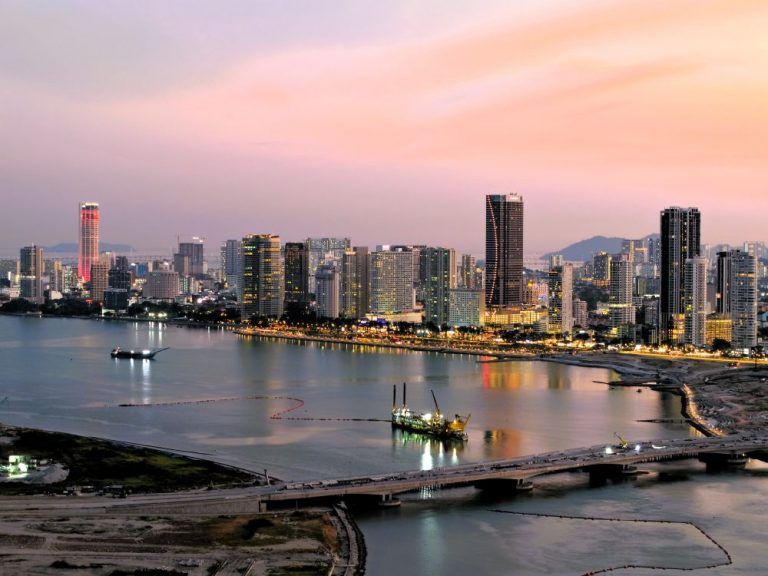
Malaysia’s leading island destinations, Penang and Langkawi, need their own home-based airlines if they are to sustain tourism growth and compete more effectively with rival destinations across Asia, according to a new report from aviation consultancy BAA & Partners.
The consultancy argues that while both islands continue to attract strong visitor numbers, their long-term growth is constrained because every major airline decision affecting the destinations is made outside the islands.
Penang and Langkawi have become two of Malaysia’s tourism success stories. Penang has built a global reputation for its UNESCO-listed heritage, world-class food scene and growing business travel market, while Langkawi’s 99-island archipelago attracts visitors seeking beaches, luxury resorts and nature experiences.
Passenger numbers continue to recover strongly. Penang International Airport handled 8.3 million passengers last year, making it Malaysia’s second-busiest airport after Kuala Lumpur International Airport, which processed 63.4 million travelers. Langkawi International Airport welcomed 2.9 million passengers in 2025.
However, BAA & Partners warns that future growth is far from guaranteed as destinations across Southeast Asia continue investing aggressively in tourism and air connectivity.
Decisions made in Kuala Lumpur
According to Linus Benjamin Bauer, founder of BAA & Partners, neither Penang nor Langkawi has an airline headquartered on the islands, leaving their connectivity dependent on carriers whose primary focus is supporting Kuala Lumpur’s hub network.
“Every flight, every route and every capacity decision affecting these islands is made by airlines headquartered in Kuala Lumpur,” Bauer said. “Those decisions are optimized for their own hub networks rather than the economic priorities of Penang or Langkawi.“
Penang is currently served by 30 airlines operating flights to 34 destinations, with around 335 international departures each week.
Carriers such as AirAsia, Malaysia Airlines or Batik Air evaluate new routes or additional frequencies from Penang based largely on how services fit into Kuala Lumpur’s broader network strategy rather than on Penang’s tourism or business objectives.
Langkawi faces a similar challenge. Although Airports Council International named Langkawi International Airport the Best Airport in Asia Pacific last year, the island remains heavily reliant on seasonal charter flights and scheduled services from Kuala Lumpur, Singapore and a limited number of Chinese cities.
The consultancy believes this leaves both destinations vulnerable as competing ASEAN tourism markets expand their own direct air services.
A different airline model
Rather than creating another low-cost airline, BAA & Partners believes Malaysia should encourage boutique regional carriers based in Penang and Langkawi.
The consultancy argues these airlines could operate year-round scheduled services to key regional markets that are currently underserved. Potential routes from Penang could include destinations such as Kochi, Osaka, Hanoi and Bali, while Langkawi could benefit from direct year-round flights to Hong Kong, Shanghai and Mumbai.
The report also identifies Singapore, Bangkok and several cities in China and India as important feeder markets that could help both islands reduce their dependence on seasonal tourism.
According to Bauer, dedicated home-based airlines could transform Penang and Langkawi into year-round premium destinations instead of relying on seasonal visitor peaks.
Business travel opportunities
The report highlights Penang’s growing importance beyond leisure tourism. The state has become one of Southeast Asia’s leading semiconductor manufacturing hubs, with major multinational companies including Intel, AMD and Broadcom operating there. Over the years, Penang has developed a sophisticated electronics ecosystem covering design, manufacturing, assembly and testing.
Medical tourism is another fast-growing sector, supported by modern private hospitals, competitive healthcare costs and English-speaking medical professionals.
Penang is also targeting a larger share of the meetings, incentives, conferences and exhibitions (MICE) market. The Penang Convention and Exhibition Bureau plans to attract 26 international events during 2026 and 2027.
However, Bauer notes that Penang faces strong competition from destinations including Singapore, Bangkok, Bali, Danang and Chiang Mai.
Unlike Penang, each of those destinations benefits from at least two home-based airlines capable of guaranteeing direct air services, offering special delegate fares and partnering with convention bureaus when bidding for international events.
Filling the missing gap
BAA & Partners describes the absence of home-based airlines as the missing element preventing Penang and Langkawi from reaching their full economic potential.
“The question is not whether Penang and Langkawi can attract passengers—they already do,” Bauer said. “The real question is whether Malaysia is prepared to give these island economies the tools they need to compete on equal terms with the region’s best-connected destinations.“
The consultancy concludes that creating locally based regional airlines could provide the direct international connectivity needed to support tourism, business travel and investment. And help Penang and Langkawi prospering with or without Kuala Lumpur central government say.