
Urbanization, economic growth and a rapidly expanding global middle class will fuel sustained demand for air travel over the next two decades, according to Airbus’ 2026-2045 Global Market Forecast (GMF).
The aircraft manufacturer predicts the world’s air passenger traffic will grow by an average 3.9% annually, with the number of travelers more than doubling to around 10 billion passengers a year by 2045.
Airbus says the next phase of aviation growth will be driven by smaller and medium-sized cities rather than traditional mega hubs. As urban populations spread beyond major metropolitan areas, airlines will increasingly add direct links between secondary cities, supported by more fuel-efficient aircraft and growing passenger demand.
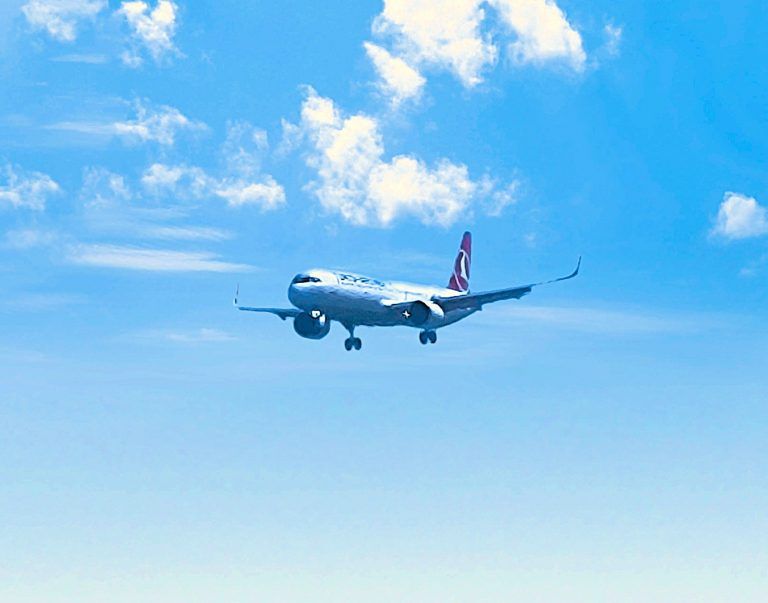
Routes such as Riga-Tenerife and Melbourne-Alice Springs are already viable with the Airbus A220, while longer-range aircraft are opening entirely new nonstop markets, including Lisbon-Recife on the A321neo, Dublin-Nashville on the A321XLR, Algiers-Kuala Lumpur on the A330neo and Taipei-Phoenix on the A350.
Airbus said aviation remains essential not only for transporting high-value cargo but also for connecting people, supporting tourism, business travel and visits to friends and relatives (VFR), while serving as an economic lifeline for many communities.
The company’s product strategy reflects these market trends. Airbus currently has an order backlog of about 9,000 aircraft, supporting planned production increases across its commercial aircraft family, including a monthly production rate of 75 A320 Family aircraft. More than 70% of the A320 Family backlog consists of the larger A321neo and A321XLR, which Airbus says are ideally suited to opening new city pairs. The A330neo will serve higher-capacity markets, while the A350 continues to expand its role in long-haul passenger services.
The forecast also highlights major demographic shifts. By 2045, the global middle class is expected to grow by 1.4 billion people, an increase of 34%, creating a much larger pool of potential air travelers. This growth will be supported by global GDP expanding at an average 2.6% annually and urban populations increasing by 1.3 billion people over the same period.
Airbus expects much of the demand to come from the Asia-Pacific region, where rapidly growing economies including India, Vietnam, Indonesia and Malaysia are reshaping global travel patterns. Rising international migration is also boosting demand for VFR travel.
To meet future demand, Airbus forecasts airlines will require 42,060 new passenger and freighter aircraft between now and 2045. This includes 22,240 aircraft for traffic growth and 19,820 replacements for older, less efficient models. About 81% of deliveries will be single-aisle aircraft, while 19% will be widebodies.
Fleet renewal is expected to accelerate as airlines replace aging aircraft with more fuel-efficient new-generation models. Airbus predicts that by 2045, nearly 100% of the global commercial fleet will consist of the latest generation aircraft, compared with about 39% in 2026, delivering significant improvements in fuel efficiency and lower CO₂ emissions.