Travelers dreaming of Iceland now have one more reason to book the trip of a lifetime. On August 12, 2026, the Nordic island nation will sit directly in the path of a rare total solar eclipse, turning some of its most dramatic landscapes into front-row seats for one of nature’s greatest shows.
The celestial event is already generating major buzz across the travel industry, with eclipse chasers, astronomers, photographers and adventure travelers expected to descend on Iceland for the phenomenon.
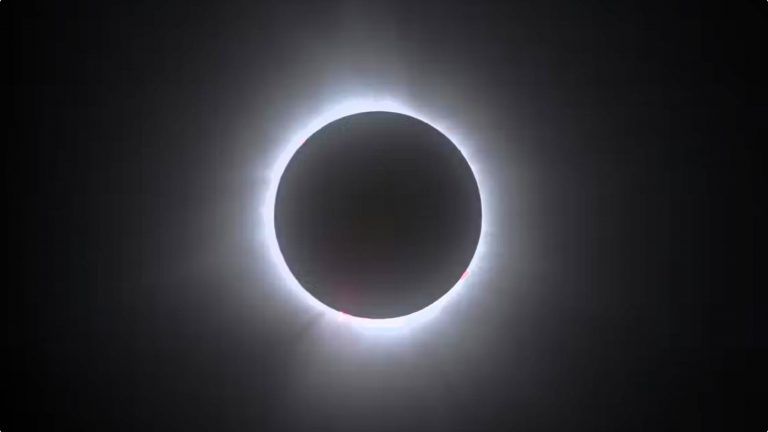
Unlike a partial eclipse, a total solar eclipse completely blocks the sun for a brief period, plunging the landscape into eerie twilight. Temperatures suddenly dip, stars and planets emerge in the middle of the afternoon, and the sun’s glowing outer atmosphere becomes visible. Moments before and after totality, viewers may also catch the famous “Diamond Ring” effect, when the final beam of sunlight flashes brilliantly around the moon’s edge.
Total solar eclipses are relatively rare events. While they occur somewhere on Earth roughly every 18 months, any one location may only experience totality once every few centuries because the eclipse path is so narrow.
For the 2026 event, the path of totality begins in northeast Greenland before crossing western Iceland, including the Westfjords, Snæfellsnes Peninsula and Reykjanes Peninsula, before continuing onward to Portugal and Spain. Large parts of Europe, North America and Africa will only witness a partial eclipse, making Iceland one of the world’s most sought-after viewing destinations.
Why Iceland could be the ultimate eclipse destination
Iceland offers a unique combination of geography, scenery and accessibility that sets it apart from other eclipse-viewing locations.
The point of maximum eclipse sits just offshore between the Westfjords and Snæfellsnes Peninsula, delivering the longest totality duration of approximately two minutes and 18 seconds. That extra viewing time could make all the difference for visitors hoping to fully absorb the spectacle.
The country’s sparse population and minimal light pollution will also enhance visibility, especially in remote regions where dramatic fjords, volcanic landscapes and glaciers create unforgettable natural backdrops.
Despite Iceland’s reputation for unpredictable weather, August statistically provides some of the year’s better viewing conditions, with roughly a 40% chance of clear skies. While Spain and Portugal may offer sunnier forecasts overall, they will experience shorter periods of totality and more urban light interference.
Travel experts are already advising visitors to secure accommodations and transportation early, particularly in western Iceland where demand is expected to surge.
The rugged Westfjords are tipped to become one of the top eclipse hotspots thanks to their isolated scenery, towering cliffs and quiet fjords offering unobstructed views. The Snæfellsnes Peninsula, often described as “Iceland in Miniature,” combines glaciers, lava fields, black sand beaches and iconic Mount Kirkjufell into one compact region likely to attract photographers from around the globe.
Meanwhile, the Reykjanes Peninsula could prove especially popular for international visitors due to its proximity to Keflavík International Airport and Reykjavík. The region’s geothermal landscapes and attractions such as the Blue Lagoon provide added appeal for travelers extending their stay.
Even Reykjavík itself will experience totality for around one minute beginning at approximately 5:48 p.m. local time. Iceland’s colorful capital is expected to host viewing events alongside its thriving arts, culinary and nightlife scene.