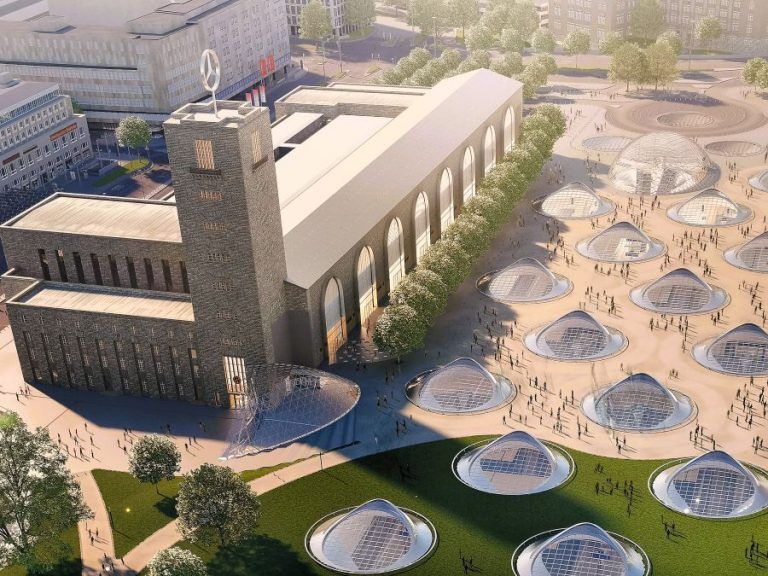
The troubled Stuttgart 21 rail megaproject has suffered yet another delay, with German media reports indicating the new underground station in Stuttgart will not be fully operational until the end of 2031.
The latest setback pushes completion five years beyond the previously planned opening date of late 2026 and more than 12 years after the project’s original target of 2019.
Deutsche Bahn (DB) has not officially confirmed the new date but is expected to unveil a revised commissioning strategy following a project steering committee meeting scheduled for June 26.
According to reports by the daily Frankfurter Allgemeine Zeitung, cited by several German media outlets, the delay follows a comprehensive review launched by DB CEO Evelyn Palla after she took charge of the railway operator last year. The review reportedly uncovered significant shortcomings in project management and execution.
A key challenge remains the implementation of the European Train Control System (ETCS), the advanced digital signaling technology intended to manage train operations throughout the new Stuttgart rail hub. Stuttgart 21 has been designed as Germany’s flagship pilot project for a fully digital railway junction, but technical and certification problems have repeatedly delayed progress.
Industry sources also point to ongoing issues involving emergency power systems, incorrectly installed cabling, and construction defects affecting platforms and station infrastructure. These problems have added to the project’s mounting delays and rising costs.
Rather than waiting for the entire scheme to be completed, Deutsche Bahn is now reportedly considering a phased opening. Initial operational improvements for passengers could begin as early as late 2027, while full commissioning of the underground through-station would follow several years later.
Stuttgart 21 remains one of Europe’s most controversial transport infrastructure projects. Construction began in 2010 and involves replacing Stuttgart’s historic terminus station with a modern underground through-station, along with extensive new tunnels and rail connections across the region. Costs have risen dramatically over the years, with estimates now approaching €11 billion, more than double early projections.
The project’s repeated delays have drawn comparisons with other major German infrastructure challenges, including Berlin Brandenburg Airport. Public frustration has intensified as completion dates continue to slip while passengers face ongoing construction-related disruptions.
A formal update from Deutsche Bahn is expected later this month and should provide the first official indication of when passengers can expect the long-awaited station to enter service.